In May 2026, Sberbank’s CEO German Gref publicly articulated a strategic shift that underscores the growing divide in global semiconductor access. Speaking on Russian state television, he revealed plans to deploy Chinese-made processors to power GigaChat, Russia’s flagship AI model, as Western sanctions continue to block the country’s access to advanced foreign hardware.
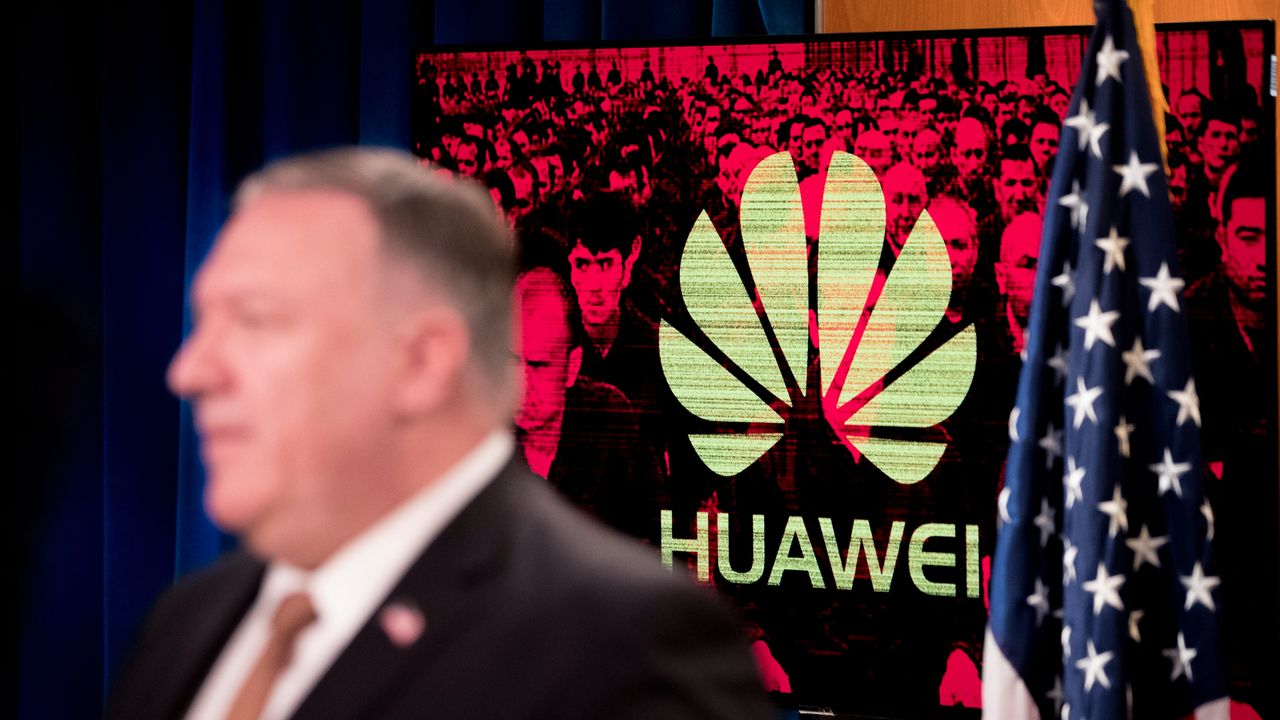
The most viable option appears to be Huawei’s Ascend 950 family—the highest-performance silicon currently produced in China. Yet securing these chips won’t be straightforward. Huawei is already overwhelmed with orders from domestic tech giants like ByteDance, Alibaba, and Tencent, with ByteDance alone committing $5.6 billion to the Ascend 950 in early 2026. Huawei projects selling 750,000 units of the chip in 2026 and expects to generate $12 billion in AI chip revenue this year.
The unintended consequence: a sanctions-driven tech bloc
Analysts warn that U.S. restrictions are inadvertently accelerating the formation of a parallel chip supply chain that could bind China and Russia in a mutual dependency. Allen Maggard, a senior analyst at C4ADS, a Washington-based security research firm, told Tom’s Hardware Premium that Russia’s constrained economy makes domestic semiconductor development unsustainable. “Russia cannot scale its domestic compute capacity using Western solutions alone,” he explained. “Its defense sector might still afford Western chips for critical systems—at least for now—but the civilian tech industry lacks the purchasing power. That leaves China’s electronics sector as the only economical alternative for mass adoption.”
Sberbank isn’t an outlier in this trend. Tramplin Electronics, a Russian state-backed IT firm founded in 2025, has begun promoting a processor called Irtysh, built using designs licensed from China’s Loongson Technology. Meanwhile, Element, Russia’s largest chipmaker—where Sberbank holds a 41.9% stake—has reportedly started manufacturing microchips in China specifically for the Chinese automotive market.
Maggard characterizes the shift as a lopsided alignment. “A clear transition is underway,” he said, “but it’s tilting heavily in China’s favor. Russia is becoming a dependent customer within China’s still-developing semiconductor ecosystem.” While the Kremlin may resist surrendering full technological sovereignty, Maggard notes that Moscow is likely prioritizing the creation of a parallel tech bloc with Beijing to mitigate isolation.
Washington’s policy whiplash and Beijing’s long-game strategy
The irony is palpable: Western export controls, designed to hinder China and Russia’s high-tech progress, may have achieved the opposite. The policy confusion in Washington has only deepened the problem. Over the past year, the U.S. has oscillated between banning, unbanning, and imposing tariffs on Nvidia’s H200 AI chip—creating a regulatory environment experts describe as “strategically incoherent.”
On January 13, 2026, the U.S. Commerce Department published a regulation permitting the sale of advanced AI chips to China. But the move was immediately criticized by the Council on Foreign Relations as unenforceable and self-contradictory. Sources suggest Chinese customs officials were instructed the very next day to block all incoming H200 shipments, effectively rendering the policy moot.
Mishel Kondi, a senior analyst at C4ADS focused on human security, points out that China’s push for semiconductor self-reliance predates U.S. sanctions. “China’s ‘Made in China 2025’ initiative was announced in 2015,” she said. “It reflects a long-standing state strategy to reduce dependence on U.S. and allied technologies.”
Kondi cautions that it remains too early to declare the sanctions a success or failure. “Export controls have indeed created significant hurdles for China’s compute infrastructure,” she noted, “but Chinese actors continue to exploit loopholes through university procurement networks, transshipment via Southeast Asian jurisdictions, and corporate shell games.”
What comes next: fragmentation or resilience?
The U.S. faces a critical inflection point. If Washington’s policy remains inconsistent, it risks accelerating the formation of a Sino-Russian tech bloc that could undermine long-term strategic goals. Meanwhile, Beijing continues to invest aggressively in domestic chip production, positioning itself as the primary supplier for both its own market and isolated allies.
For Russia, the path forward is less about sovereignty and more about survival. With limited access to Western hardware and dwindling domestic alternatives, alignment with China’s expanding semiconductor ecosystem may become the only viable route. Whether this alliance proves sustainable—or merely accelerates China’s dominance—will depend on how both countries navigate the evolving geopolitics of technology.
AI summary
ABD’nin yaptırımları Çin’in yerli çip üretimini hızlandırırken, Rusya da bu süreci fırsata çeviriyor. Peki, iki ülkenin yarıiletken ekosistemi nasıl birbirine bağlıyor?