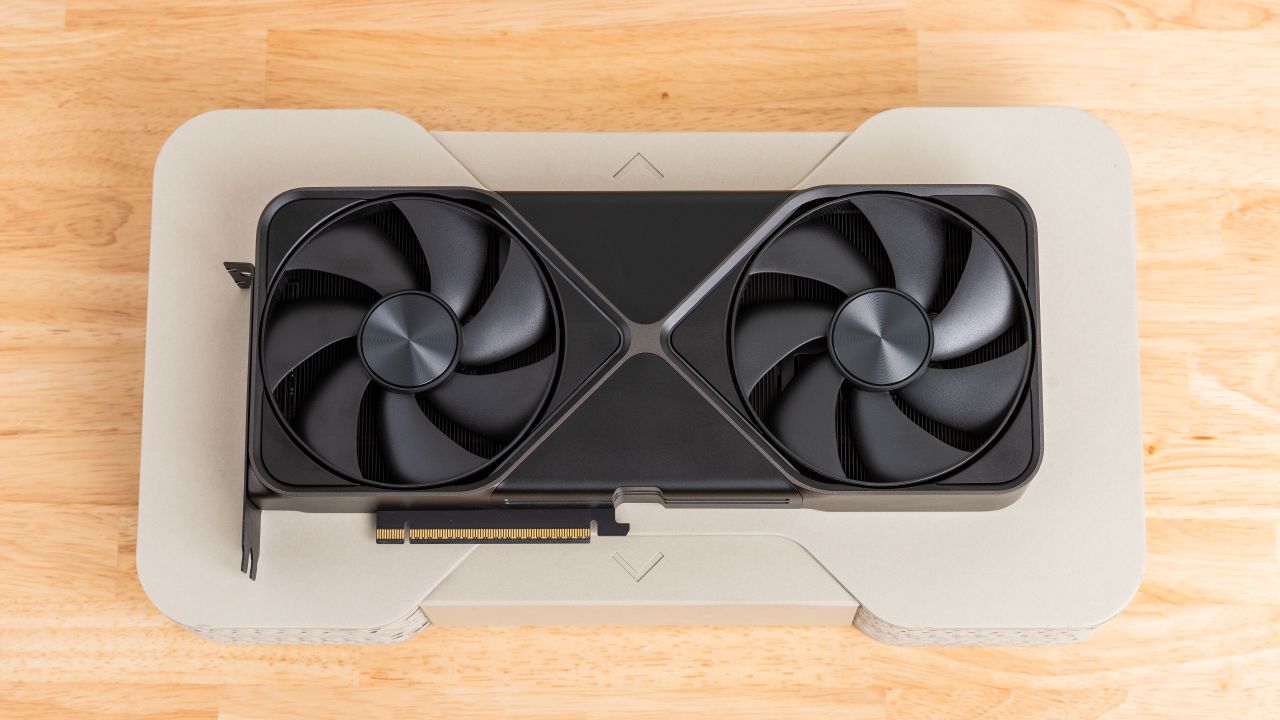
After a year without updates to its GeForce RTX 50-series lineup, Nvidia might still be planning a mid-cycle refresh—but concrete evidence remains scarce. The latest clue, however, comes from an unexpected source: Seasonic’s online power supply (PSU) wattage calculator, which now includes three unreleased models—RTX 5070 Super, RTX 5070 Ti Super, and RTX 5080 Super. These listings provide Total Graphics Power (TGP) figures that, while unconfirmed by the company, offer a glimpse into potential performance expectations.
Power targets reveal modest but meaningful upgrades
Seasonic’s tool assigns specific power envelopes to these Super variants, suggesting nuanced improvements over their non-Super counterparts. The RTX 5070 Super, for instance, is listed with a 275W TGP, representing a 10% increase from the standard RTX 5070’s 250W. The RTX 5070 Ti Super jumps to 350W—17% higher than the existing 300W RTX 5070 Ti. Meanwhile, the RTX 5080 Super is pegged at 415W, a 15% rise from the RTX 5080’s 360W baseline.
These incremental power hikes could imply that Nvidia is leveraging higher clock speeds and thermal headroom to squeeze out additional performance without introducing new silicon. Such an approach aligns with historical Super refreshes, where gains were often achieved through refined binning and power management rather than architectural overhauls. The calculator’s figures also hint at potential memory upgrades, with rumors of 3GB-per-module GDDR7 chips increasing total VRAM capacity. While GDDR7’s power draw is relatively modest, the cumulative effect of more memory chips could justify part of the observed TGP increases.
Performance expectations: realistic but limited
Historical data suggests that power limit boosts rarely translate directly into proportional frame rate gains. For example, Tom’s Hardware’s review of the MSI RTX 5090 Lightning Z demonstrated that the most significant benefits from higher TGPs typically emerge in ray-traced and path-traced workloads—where computational demands push GPUs to their thermal and electrical limits. In contrast, rasterized gaming often sees diminishing returns from incremental power increases.
Analysts and reviewers have noted that software optimizations like DLSS 4.5 and Multi-Frame Generation have already delivered substantial performance uplifts for existing RTX 50-series cards. These technologies enable higher effective frame rates and improved image quality at lower native resolutions, reducing the urgency for a hardware refresh. However, as display technologies evolve—with 4K120Hz OLEDs and LCDs becoming more common, and HDMI 2.2 standards looming for 2027—even incremental hardware updates could help maintain Nvidia’s competitive edge.
A refresh in 2027? Timing and speculation
Given the lack of official announcements, it remains unclear when—or if—these Super models will arrive. Nvidia’s recent focus has been on refining the existing Blackwell architecture through software enhancements rather than rolling out new hardware. Yet, the presence of these models in a reputable PSU tool suggests internal preparations may already be underway.
Industry analysts speculate that a mid-cycle refresh could debut at major trade shows like CES or Computex in early 2027, aligning with the typical cadence of such updates. Until then, enthusiasts and power users will need to rely on official announcements or further leaks to separate fact from speculation. For now, these listings serve as a tantalizing but unproven hint at what Nvidia might have in store for its RTX 50-series lineup.
AI summary
Seasonic’in güç kaynağı hesaplayıcısında yer alan RTX 5080 Super, RTX 5070 Ti Super ve RTX 5070 Super, gelecekteki performans artışlarını gözler önüne seriyor. TGP değerleri ve tahmini özellikler hakkında detaylı bilgi.