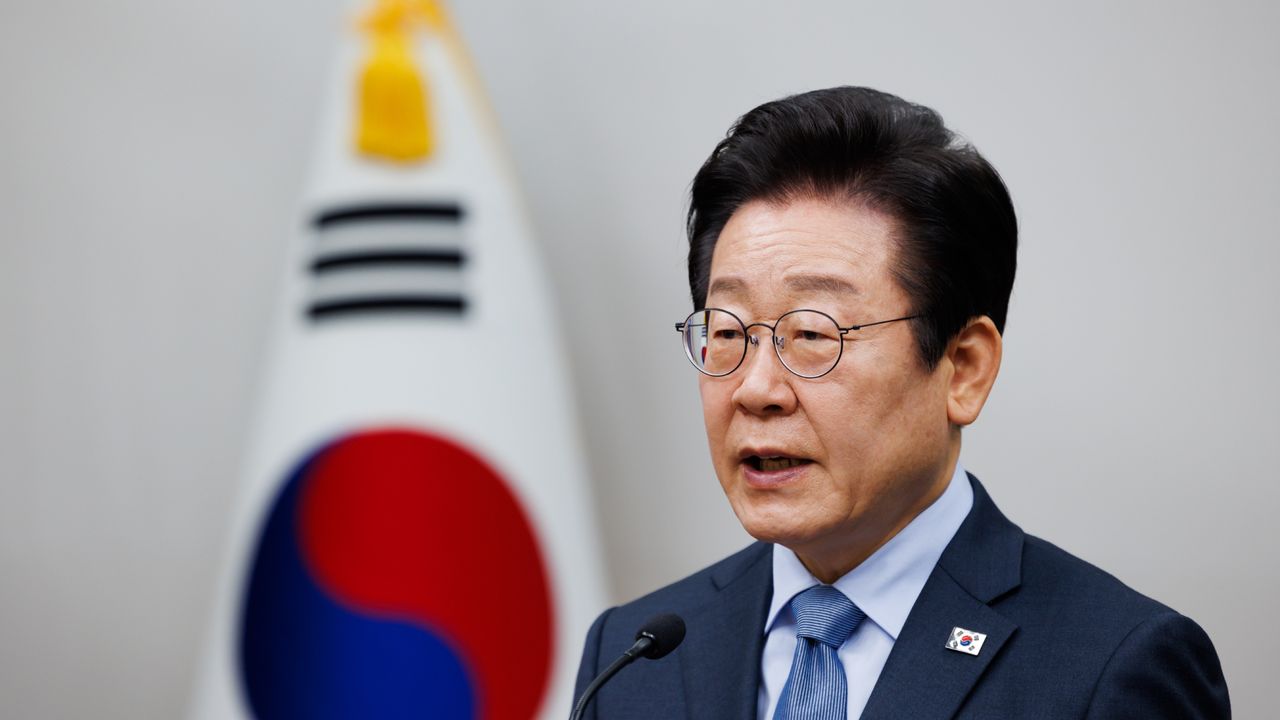
South Korea’s bold push to dominate the global semiconductor and AI landscape has hit an unexpected hurdle: infrastructure. President Lee Jae-myung unveiled a ₩1,350 trillion ($880 billion) 10-year public-private investment plan on June 29, aiming to expand memory chip production, AI data centers, and robotics. Samsung Executive Chairman Lee Jae-yong and SK Group Chairman Chey Tae-won stood beside the president as he announced the initiative, which combines ₩830 trillion in corporate capital expenditure with government-backed projects.
The plan’s centerpiece is the Yongin Semiconductor National Industrial Complex in Gyeonggi Province, a megacluster housing Samsung and SK hynix facilities. At full capacity, the complex is projected to consume 15–16 gigawatts of power—nearly a quarter of Seoul’s total demand—yet local supply currently stands at just 1.9 GW. A National Assembly Research Service report reveals that 6 GW of the complex’s power needs remain unsecured, with Samsung requiring 9 GW (6 GW already allocated) and SK hynix needing 6 GW (3 GW allocated).
Power grid challenges delay chip expansion
South Korea’s power generation is concentrated on the coasts, where nuclear and liquefied natural gas (LNG) plants operate on the east coast, and renewables dominate the southwestern Honam region. Inland fabs, however, require a vast network to transmit this energy. State utility KEPCO is developing a ₩37 trillion, 1,153 km 345 kV transmission line to bridge this gap, targeting completion by 2036. The project’s history, however, raises concerns: the Bukdangjin-Sintangjeong line took 22 years to finish, with site selection alone dragging on for over a decade, and delays cost ₩1.17 trillion ($810 million) in losses.
Even before construction begins, local opposition threatens progress. The Donghaean-Dongseoul high-voltage direct current line, a 280 km route from Uljin to Hanam, faces delays due to community resistance. In 2024, Hanam’s refusal to expand a KEPCO substation nearly derailed the plan. Meanwhile, SK hynix accelerated its Yongin fab completion by 12 years, from 2045 to 2033, outpacing the infrastructure meant to support it.
To fill the gap, KEPCO and the government propose six LNG plants within the Yongin complex, scaling from 3 GW to 10 GW. Yet this plan conflicts with South Korea’s 2050 renewable energy targets and the Democratic Party’s carbon-neutrality goals, which demand the abandonment of LNG reliance.
Water shortages threaten fab operations
Beyond power, semiconductor fabs are notoriously water-intensive, with a single memory fab consuming up to 100,000 tons of water daily. The Yongin complex is projected to need 800,000 tons per day once fully operational. The phased plan includes sourcing 200,000 tons daily from 2031 via Paldang Dam surplus and treated wastewater, eventually reaching 600,000 tons by 2034 through new pipelines.
However, SK hynix’s accelerated fab timeline—now set for 2033—risks outpacing the water supply. Local disputes have already stalled pipeline permits, with Yeoju City and Hanam City objecting to construction. The southwestern Gwangju cluster faces even greater water scarcity, as the Yeongsan and Seomjin river basins hold only half the water capacity of the Han basin supplying Yongin. Existing dam contracts are fully allocated, and government projections indicate a 219 million m³ annual shortfall in the Yeongsan basin by 2030—before any new fabs begin operations.
Record profits fuel ambition, but risks loom large
The financial firepower behind this expansion is undeniable. Samsung’s Device Solutions division reported ₩53.7 trillion in operating profit for Q1 2025, with President Kim Yong-kwan predicting 2026 profits will surpass the division’s cumulative earnings over the past 40 years. SK hynix, now South Korea’s most valuable listed company, posted a record ₩47.21 trillion in operating profit for 2025 and plans to raise $29 billion via a Nasdaq listing to fund Yongin, Cheongju packaging, and EUV tool investments.
These gains rely on sustained high contract prices, particularly for DRAM, which have surged through 2026. Yet without resolving the power and water bottlenecks, South Korea’s semiconductor dominance may face an unexpected bottleneck—one that could reshape the global tech landscape.
AI summary
Güney Kore’nin yarı iletken ve yapay zeka yatırımlarına yönelik 880 milyar dolarlık planı, enerji ve su kaynaklarındaki ciddi eksikliklerle karşı karşıya. Samsung ve SK hynix’in hızlandırılmış projeleri altyapıyı zorluyor.