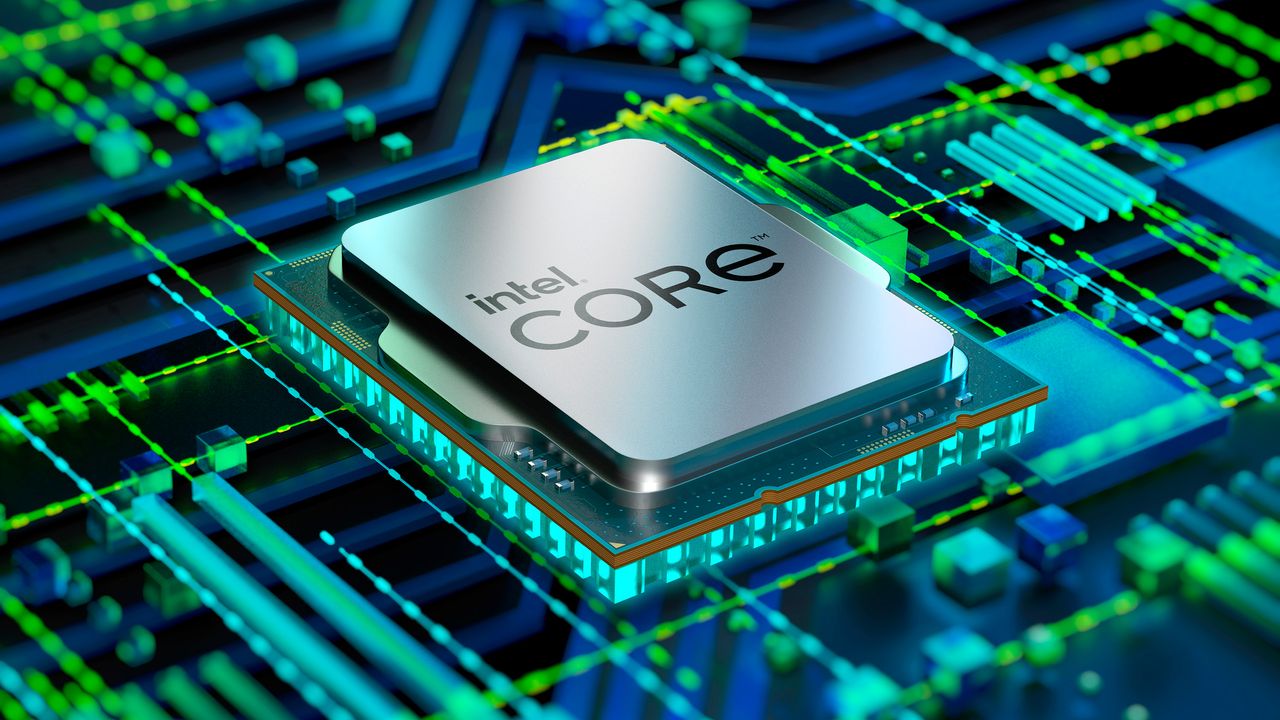
Intel’s upcoming Nova Lake processors are set to reintroduce AVX-512 support, marking a significant shift after the instruction set was absent from consumer CPUs since Rocket Lake. Recent Linux kernel patches indicate that both performance (P) cores and efficiency (E) cores in Nova Lake will feature native 512-bit execution for the first time since the hybrid architecture era began with Alder Lake.
A return to full-width SIMD for Intel’s client CPUs
The introduction of AVX-512 on Nova Lake follows years of fragmentation caused by Intel’s hybrid core design. With Alder Lake and subsequent generations, E-cores lacked 512-bit support, forcing the scheduler to downgrade 512-bit workloads when threads migrated to E-cores—a process that either slowed performance or caused crashes. Nova Lake appears to resolve this by enabling 512-bit execution across both core types, eliminating the need for fallback to 256-bit paths.
Intel’s AVX10 architecture underpins this change, allowing applications to leverage 512-bit instructions on P-cores while maintaining 256-bit compatibility on E-cores. The patches suggest that Nova Lake will support native 512-bit execution on all cores, though E-cores may still cap performance for certain operations. This unified approach contrasts with AMD’s current Zen 5, which offers full 512-bit execution, and Zen 4, which split 512-bit tasks into dual 256-bit cycles to avoid disruption.
Wider registers and enhanced instruction sets
AVX-512’s revival on Nova Lake extends beyond raw bit-width. The instruction set’s latest iteration, AVX10.2, introduces broader register availability and expanded functionality:
- Register count doubles from 16 to 32, enabling more concurrent operations.
- Enhanced masking capabilities improve precision in parallel computations.
- Embedded broadcast simplifies rounding math operations, reducing latency in floating-point tasks.
- Converged 256-bit support ensures compatibility across all core types without performance penalties.
These improvements align with the demands of modern compute-heavy workloads, including AI inference, video encoding, and scientific simulations, where AVX-512 delivers measurable speedups.
What’s next for Intel and Nova Lake?
While the Linux patches confirm AVX-512’s return, Intel has not yet officially announced the feature for Nova Lake. The company’s previous focus on AVX10 centered on server-grade chips, leaving uncertainty around client adoption. Nova Lake’s positioning as a successor to Arrow Lake suggests a renewed emphasis on high-performance computing, but final details may depend on market feedback and thermal constraints.
For now, the patches offer a glimpse into Intel’s strategy to unify its CPU architecture. If realized, Nova Lake could bridge the gap between hybrid efficiency and raw compute power, restoring AVX-512 as a cornerstone of Intel’s client lineup.
AI summary
Intel Nova Lake işlemcilerinde AVX-512’nin geri dönüşüne dair Linux yamaları kanıt sunuyor. Hem P-hem de E-çekirdeklerinde 512-bit desteklemesiyle performans ve verimlilik nasıl değişecek?