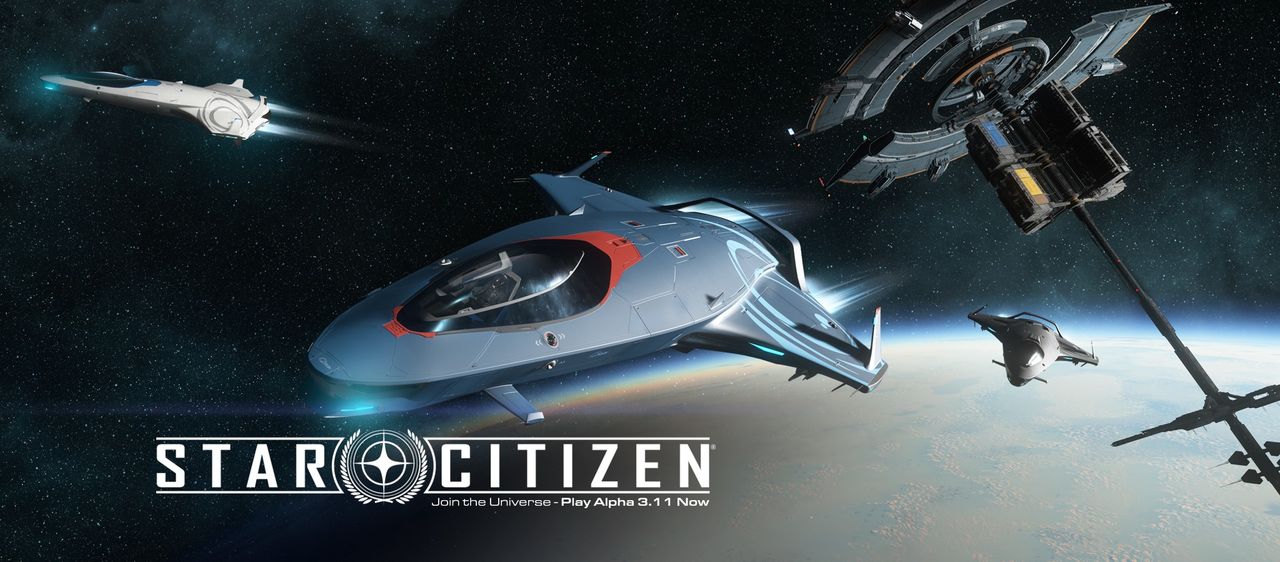
Fourteen years after its initial announcement, Star Citizen has surpassed $1 billion in lifetime crowdfunding—a milestone achieved without a confirmed release date. The persistent support reflects the game’s dedicated community, but also underscores the challenges of funding and developing a massive, unfinished title. Despite years of development delays, Cloud Imperium Games continues to expand the persistent universe, with players now speculating about potential console releases for next-gen systems.
A decade and a half of development without a finish line
Star Citizen’s journey began in 2012 with a Kickstarter campaign that promised a groundbreaking space simulation experience. Initially, backers envisioned a polished, complete game within a few years. Instead, the project evolved into one of the most ambitious and protracted early access titles in gaming history. As of today, the game remains in active development, with no official release window announced. Cloud Imperium Games has suggested a possible launch sometime between 2027 and 2028, though such timelines have shifted repeatedly over the years.
Community contributions have played a central role in sustaining development. Unlike traditional publisher-funded projects, Star Citizen relies almost entirely on player funding through purchases of in-game ships, cosmetics, and subscriptions. This model has allowed the team to scale development teams, expand the game’s scope, and maintain open communication with backers. Yet, it has also drawn scrutiny over transparency and delayed deliverables.
Expanding beyond PC: console ambitions and next-gen uncertainty
With Sony and Microsoft preparing their next console generations, speculation has grown about Star Citizen arriving on PlayStation and Xbox platforms. Cloud Imperium Games has not officially confirmed console support, but the timeline alignment suggests it may need to adapt the game for systems like the PS6 or Xbox Helix. Supporting four console generations in a single title would be unprecedented and technically demanding, requiring significant engine adjustments and compatibility layers.
The game’s persistent universe already spans multiple modules—Squadron 42, the single-player campaign, and the ongoing MMO experience—each developed at different paces. Integrating these components across multiple platforms adds another layer of complexity. Developers would need to balance performance, feature parity, and input method adaptations while ensuring the core simulation experience remains intact.
What’s next for Star Citizen’s development roadmap?
Despite the delays, Cloud Imperium Games has continued to release regular updates, expanding the game’s lore, player base, and technical capabilities. Recent patches have introduced new ships, improved graphics, and refined gameplay mechanics. The team has also emphasized the importance of Squadron 42’s standalone release, though its integration with the persistent universe remains unclear.
Looking ahead, the team faces critical decisions about scope, timeline, and platform support. The $1 billion milestone may alleviate some financial pressure, but it also raises expectations for deliverables. Backers are increasingly vocal about transparency, while new players question the value of continued investment in an unfinished product. Cloud Imperium Games must balance community enthusiasm with realistic development goals to sustain momentum.
As the gaming industry evolves, Star Citizen stands as a unique case study in long-term crowdfunding and persistent-world development. Whether it ultimately launches in 2027, 2028, or beyond, its journey highlights the possibilities—and pitfalls—of ambitious, player-funded game development.
AI summary
Star Citizen, 14 yıldır geliştiriliyor ve 1 milyar dolarlık fon topladı. Peki, bu devasa proje neden hala erken erişimde ve geleceği ne olacak? Detayları inceledik.