Intel has launched a major expansion at its Bowers Campus in Santa Clara, California, marking a significant step toward securing the supply of critical photomasks for advanced semiconductor manufacturing. The company broke ground this week on a new 107,000 square foot manufacturing facility, designed to enhance its capacity to produce high-precision reticles—essential components used in the fabrication of modern processors. The expansion aligns with Intel’s broader strategy to strengthen domestic chipmaking capabilities, particularly for next-generation process technologies.
A new hub for advanced photomasks
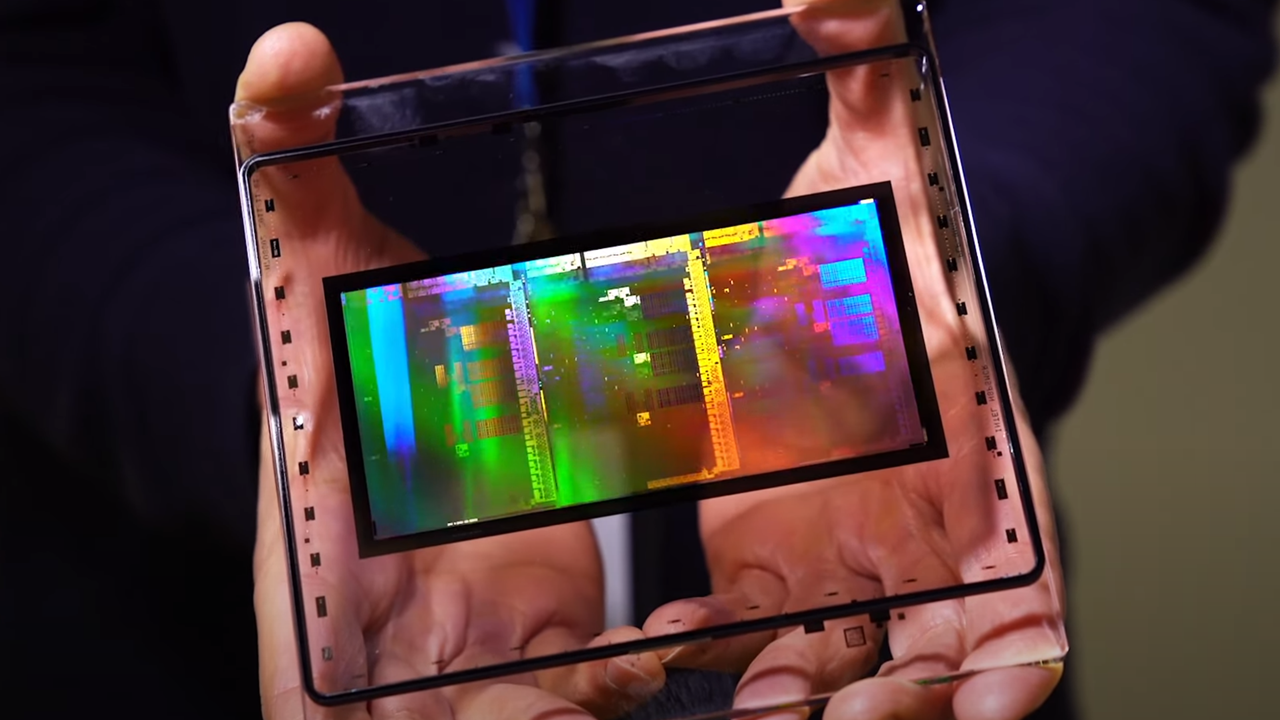
The newly approved facility will specialize in producing 6-inch by 6-inch photomasks compatible with both deep ultraviolet (DUV) and extreme ultraviolet (EUV) lithography. These reticles are fundamental to semiconductor fabrication, as each advanced chip requires hundreds of masks, with every revision impacting production timelines. The primary focus of the site will be on masks for Intel’s most advanced nodes, including the upcoming 18A, 18A-P, 14A, and future generations like 10A and 7A. These nodes rely on sophisticated lithography tools, including EUV and the emerging High-NA EUV systems, which demand reticles with extremely dense patterns and advanced optical proximity correction (OPC) techniques.
Why photomask production matters in the U.S.
Intel’s move to bolster its in-house photomask capabilities comes at a time when global semiconductor supply chains face increasing scrutiny and geopolitical pressures. The Santa Clara facility, operational since 1986, serves as Intel’s primary mask manufacturing hub, alongside its Hillsboro, Oregon site. Historically, non-critical masks were outsourced, but the company has since prioritized vertical integration to reduce dependencies and accelerate innovation.
A key advantage of in-house production is the ability to rapidly replace damaged EUV masks. EUV lithography tools, despite using protective pellicles, can degrade masks over time, necessitating frequent replacements. By manufacturing these reticles on-site, Intel can minimize downtime and maintain tighter control over its production schedules. Additionally, the company is uniquely positioned as one of the few semiconductor manufacturers to design its own photomask-writing tools through its IMS Nanofabrication subsidiary. Unlike traditional single-beam systems, IMS’s multi-beam mask writers (MBMWs) project 262,144 independently controlled electron beams simultaneously, dramatically increasing throughput while maintaining nanometer-scale precision.
Strengthening U.S. semiconductor leadership
The expansion was officially launched at a groundbreaking ceremony attended by Intel’s top executives and Santa Clara Mayor Lisa Gilmor. Addressing the event, Dr. Frank Abboud, Vice President of Intel Foundry and General Manager of Intel Mask Operations, emphasized the site’s historical significance and its role in advancing U.S. semiconductor manufacturing.
"Santa Clara has been the birthplace of some of Intel’s most transformative innovations," said Abboud. "By expanding the Bowers Campus mask operations, we are reinforcing a critical capability that supports global production of advanced process technologies and underscores Intel Foundry’s commitment to leadership in U.S. semiconductor manufacturing."
With global chip demand surging and geopolitical tensions reshaping supply chains, Intel’s investment in photomask production underscores the company’s long-term vision for self-sufficiency. As the semiconductor industry continues to push the boundaries of Moore’s Law, the ability to rapidly iterate and produce high-precision masks will be a decisive factor in maintaining competitive edge. The new facility is poised to play a pivotal role in shaping the future of chipmaking, not just for Intel, but for the broader U.S. tech ecosystem.
AI summary
Intel, ABD'deki yarıiletken üretimini güçlendirmek için Kaliforniya'da yeni bir fotomaske tesisi inşa ediyor. EUV ve Yüksek-NA EUV odaklı bu tesis, ileri düzey çiplerin üretim esnekliğini artıracak.