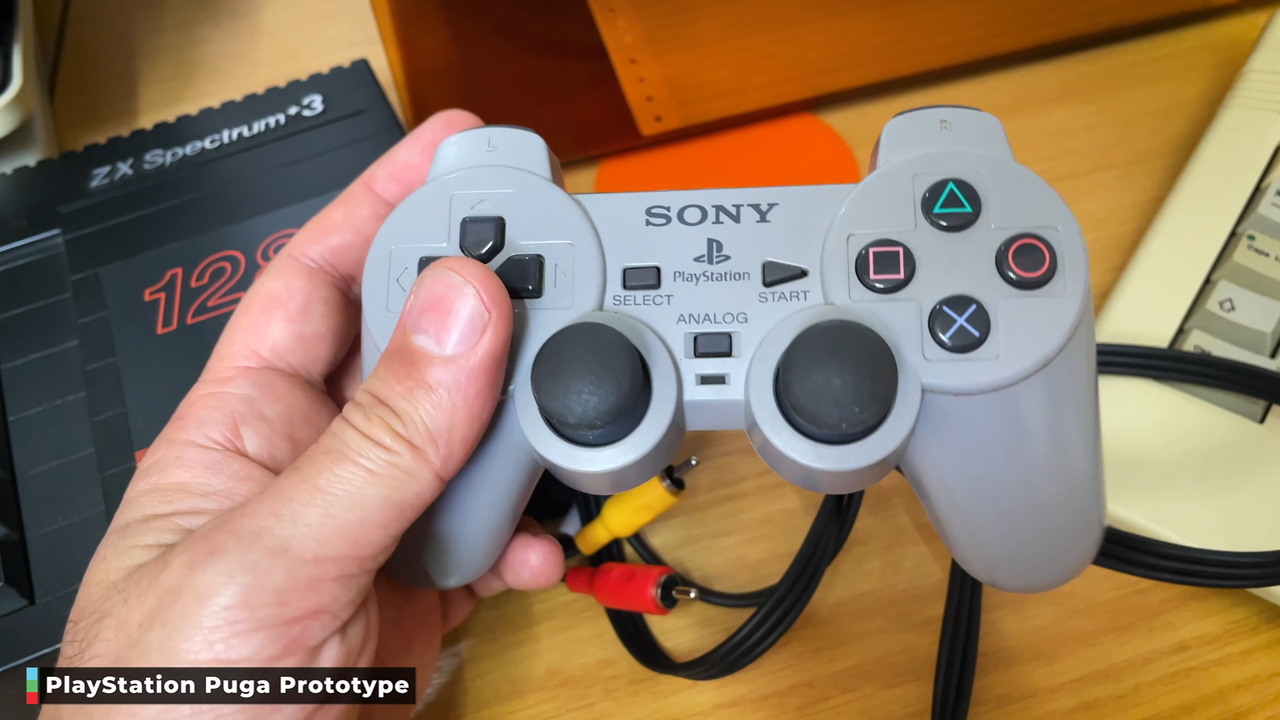
In the late 1990s, Sony faced a unique challenge in Brazil: strict import regulations made selling foreign electronics prohibitively expensive. To bypass these barriers, the company explored a radical solution—packing an entire PlayStation 1 console into a modified DualShock controller. This experimental device, later dubbed the PlayStation Puga, was designed to offer a plug-and-play gaming experience while adhering to local manufacturing requirements.
The Birth of the PlayStation Puga
The PlayStation Puga wasn’t just a concept—it was a functional prototype developed specifically for the Brazilian market. According to Brian “Biscuit” Watson, a veteran game developer with four decades of experience, the device was built to house a complete PlayStation 1 motherboard, including a 650 MHz Arm-based processor capable of emulating the console’s original hardware. Watson, who showcased the prototype during a recent interview with The Retro Collective, described it as a self-contained unit that could connect directly to a television via a bundled cable. The design also included 4GB of internal storage, theoretically allowing users to load up to 10 games onto the device.
Power and Performance Constraints
Despite its compact form factor, the PlayStation Puga was surprisingly efficient. Powered by four AA-sized batteries, the prototype demonstrated an impressive 20-hour runtime—an achievement that remains notable even by today’s standards. Watson highlighted that the device wasn’t just a technical marvel; it was a strategic move to make gaming more accessible in a region where high import costs could deter potential players. However, the project’s viability hinged on one critical factor: game licensing.
Licensing Roadblocks Doomed the Project
Sony’s ambitious plan hit a major snag when it came to game royalties. Watson revealed that Sony’s licensing division struggled to negotiate terms with third-party developers, including major publishers like Rockstar Games. The sticking point wasn’t just external developers—even internal Sony divisions couldn’t agree on royalty splits. Watson recalled that the separate unit responsible for game licensing demanded exorbitant fees, leaving the PlayStation Puga team with a dismal profit margin: just 10 cents per unit sold.
The financial model simply didn’t add up. With game publishers unwilling to accept such low royalty rates, Sony couldn’t secure the necessary titles to make the device viable. Watson noted that even Sony-published games required separate negotiations, further complicating the process. Ultimately, the lack of available games and the unsustainable revenue model led Sony to shelve the PlayStation Puga indefinitely.
A Legacy in Emulation
Though the PlayStation Puga never reached consumers, its technical foundation lived on. The emulator developed for the prototype was later repurposed and integrated into the Sony Xperia Play, a gaming-focused smartphone released in 2011. This adaptation allowed the company to leverage some of the Puga’s innovations, albeit in a different form factor. While the original device remains a fascinating footnote in gaming history, its cancellation underscores the delicate balance between innovation and profitability.
Today, the PlayStation Puga serves as a reminder of how even the most inventive ideas can falter under financial or bureaucratic pressures. Its story also highlights the challenges of navigating global markets, where regulatory hurdles and licensing disputes can derail even the most well-conceived projects.
AI summary
Sony’nin Brezilya için geliştirdiği PS1’i DualShock kumandanın içine sığdıran PlayStation Puga projesi neden sadece 10 sentlik kar marjıyla iptal edildi? Detaylar ve ardında bıraktığı miras.