
Taming Context Overload in AI Agents with Salesforce's Agentforce Vibes 2.0
VentureCrowd's experience with AI coding agents reveals a hidden challenge: context overload, and how Salesforce's Agentforce Vibes 2.0 helps overcome it
VentureCrowd's experience with AI coding agents reveals a hidden challenge: context overload, and how Salesforce's Agentforce Vibes 2.0 helps overcome it

Businesses and educators can now deploy AI agents in ChatGPT to handle routine tasks like data collection and email drafting, freeing teams to focus on strategy and creativity.

OpenAI’s new Workspace Agents can automate tasks across Slack, Salesforce, and other enterprise tools, eliminating manual handoffs and running 24/7 with persistent memory. Here’s what changes—and how to get started.

Google Cloud NEXT ’26 quietly introduced a paradigm shift: software that doesn’t just respond but acts proactively. We explore how agent systems are redefining automation, from multi-agent workflows to persistent context.

AI automation is expanding beyond browsers into desktop apps like CAD tools and video editors. Three technical approaches—CDP, accessibility APIs, and vision-only—are breaking the human bottleneck in agent workflows.

Google Cloud Next '26 emphasized the importance of infrastructure for AI agents, shifting the focus from demos to production-level capabilities

Anthropic's Claude Managed Agents can now review recent events, identifying key information to inform future interactions, in a process called 'dreaming'

A new AI system from Anthropic lets agents reflect on past mistakes to improve future performance without human intervention. Early users report dramatic gains across legal, medical, and tech workflows.

AI agents often waste tokens and time without obvious errors. Learn the three silent failure modes—context overflow, unresponsive APIs, and reasoning loops—and practical fixes backed by research and code.
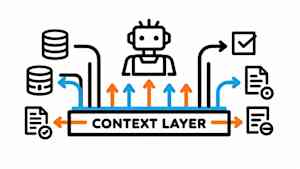
As AI agents multiply in enterprise environments, traditional retrieval pipelines struggle to handle the sheer volume of requests. Redis introduces Iris, a context platform designed to bridge this gap with real-time data sync, semantic interfaces, and agent memory storage.

MCP introduces a universal protocol that lets AI models securely connect with databases, APIs, and business systems without custom code for each tool. Discover how this standard is unlocking new AI use cases and simplifying integrations.

Google I/O 2026 unveiled agentic AI systems that move beyond chatbots to execute real tasks—transforming how developers build and users interact with technology.

Vector databases dominate AI retrieval today, but new research reveals a surprising bottleneck: semantic similarity alone can’t handle exact strings or live data. Terminal-based tools like grep and find may offer a better solution.

Discover how Hot Chat’s dual-agent demo lets you deploy AI helpers with user-scoped and channel-scoped memory in under a quarter hour using open-source tools.

Autonomous AI agents can automate complex workflows, but one mistyped command could erase your entire system. Discover how to build self-healing agents that execute untrusted code without risking catastrophic failures.

Major tech firms and startups have unleashed thousands of AI agents, but seamless teamwork remains impossible. Discover why current API-based handoffs fail and what a true agent society requires.