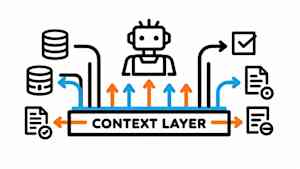
The rise of agentic AI is exposing a critical flaw in enterprise infrastructure: retrieval systems built for human-scale queries can’t keep pace with AI-driven demand. Redis, long known for its caching solutions, has unveiled Iris, a context platform designed to address the structural mismatch between agent workloads and traditional data pipelines.
Why Redis Iris arrives as the right tool for the moment
Enterprise AI adoption has reached a tipping point where agents outnumber human users in many workflows, generating orders of magnitude more data requests. Rowan Trollope, CEO of Redis, emphasizes this scale disparity as the core challenge. "Companies will soon operate thousands of agents for every human user," he explains. "That volume renders legacy retrieval systems obsolete before they even hit capacity."
The problem isn’t model accuracy—it’s infrastructure. Most retrieval layers were engineered for discrete, human-driven queries, not the continuous, high-frequency interactions of AI agents. As Trollope describes it, the current state resembles "a grocery store in every fridge"—a fragmented system where agents waste cycles re-fetching the same data instead of retrieving it once and using it repeatedly.
Five components powering agentic AI retrieval
Redis Iris combines several technologies to create a unified context layer for AI agents:
- Redis Data Integration (RDI): This general availability feature continuously syncs data from relational databases, data warehouses, and document stores into Redis using change data capture. Native connectors support Oracle, Snowflake, Databricks, and PostgreSQL.
- Context Retriever: Still in preview, this tool lets developers define business data models using Python’s pydantic library. Redis then auto-generates Model Context Protocol (MCP) tools that agents query directly, with server-side row-level access controls automatically enforced. The approach inverts traditional retrieval pipelines by shifting from "pushing" data into queries to letting agents "pull" it as needed.
- Agent Memory: Also in preview, this component stores both short-term and long-term agent state across sessions, eliminating the need for agents to re-derive context with each interaction.
- Redis Flex: A redesigned storage engine that keeps 99% of data on solid-state drives while maintaining 1% in RAM. The architecture delivers petabyte-scale retrieval with sub-millisecond latency at a fraction of the cost of in-memory-only solutions.
- Redis Search and LangCache: These components form the retrieval and semantic caching backbone. LangCache reduces redundant model calls by caching prompt responses, while Redis Search enables fast, semantic retrieval of structured and unstructured data.
How Iris fits into the evolving AI infrastructure market
The launch coincides with a broader industry shift away from traditional Retrieval-Augmented Generation (RAG) toward hybrid retrieval systems. According to VentureBeat’s Q1 2026 VB Pulse survey, buyer intent for hybrid retrieval adoption tripled from 10.3% to 33.3% in three months, surpassing evaluation as the top enterprise investment priority. Custom in-house stacks increased from 24.1% to 35.6%, signaling that enterprises are outgrowing off-the-shelf solutions.
Analysts see this convergence as inevitable. Stephanie Walter, Practice Leader for AI Stack at HyperFRAME Research, notes that "agents require governed, current, and low-latency context—not just more tokens or superior models." Her assessment aligns with Redis’s positioning: Iris doesn’t replace existing databases but instead caches and reflects data from systems like MongoDB or Oracle, integrating seamlessly into existing stacks.
Redis is launching Iris in the Snowflake Marketplace with native connectors, further expanding its reach. The company’s strategy hinges on its existing presence in operational stacks, where latency and runtime performance are critical. "For us to succeed, no other vendor needs to fail," Trollope states. "Iris complements existing data platforms rather than competing with them."
The future of agentic AI infrastructure
As AI agents become ubiquitous, the demand for real-time, scalable context layers will only intensify. Redis Iris represents a pragmatic solution for enterprises grappling with the limitations of legacy retrieval systems. By combining semantic interfaces, agent memory, and cost-efficient storage, the platform addresses the core challenges of agent-driven data access—without requiring a full infrastructure overhaul. The question now isn’t whether enterprises need this capability, but how quickly they can integrate it to keep pace with the AI revolution.
AI summary
Redis Iris, gerçek zamanlı veri alımı, anlamsal erişim ve ajan belleği sunan bir bağlam ve bellek platformudur. Üretkenlik artırmak için tasarlanmıştır.