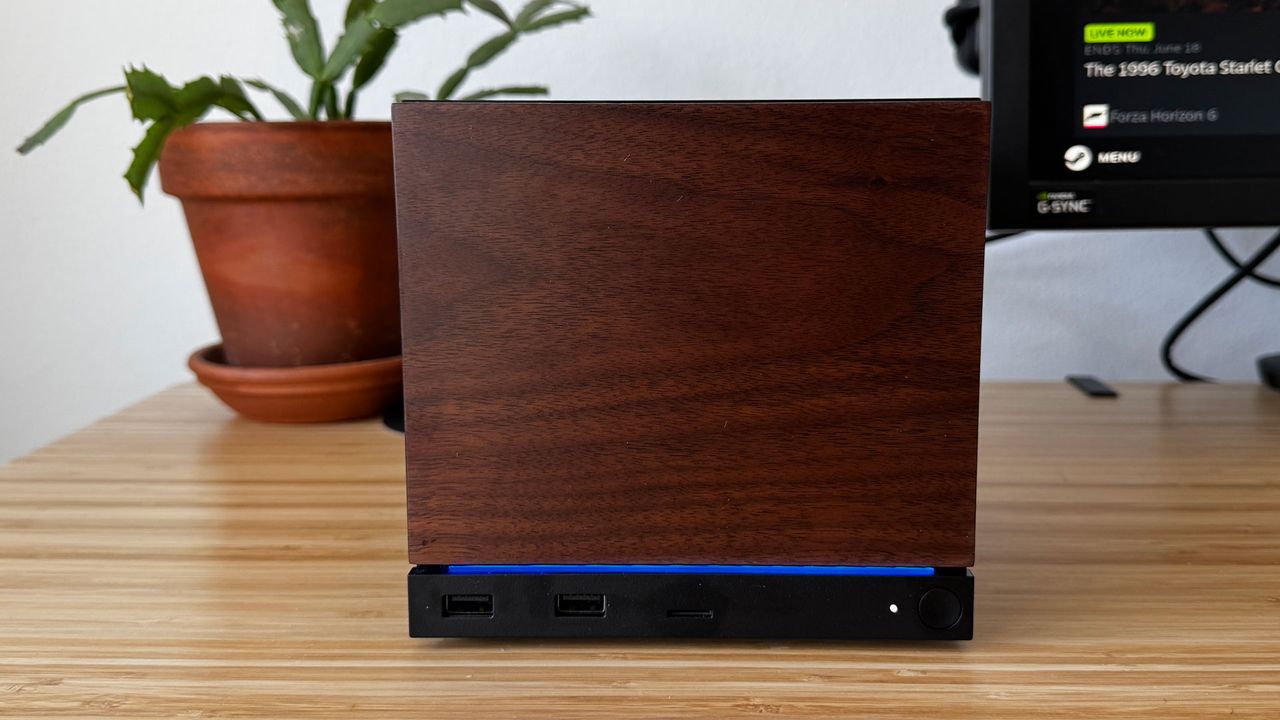
Valve’s long-awaited Steam Machine has finally arrived in living rooms, but the console’s memory configuration may disappoint PC gamers hoping for a true high-performance experience. The company has confirmed that the first production batch of its living room gaming PC will ship with just one 16GB DDR5-5600 SO-DIMM stick, locking the system into single-channel memory mode. This design choice directly impacts gaming performance, with benchmarks showing a 9% to 13% drop in frame rates—particularly noticeable in 1% lows—compared to dual-channel setups.
Limited memory, limited potential
The Steam Machine’s hardware already leans on older-generation components, pairing a semi-custom AMD Zen 4 CPU with RDNA 3 graphics and only 8GB of GDDR6 VRAM. Valve’s decision to use a single RAM stick compounds these limitations, as single-channel memory reduces available bandwidth and increases latency in memory-bound workloads. While Zen 4 and RDNA 3 remain capable for 1080p gaming, the memory bottleneck could make demanding titles less fluid, especially at higher graphics settings.
The engineering team initially suggested the console might ship with either a single 16GB stick or two 8GB sticks, but Valve later clarified that all first-batch units will include the single 16GB module. In a correction sent to Gamers Nexus, the company acknowledged the misstatement, stating, “We misspoke here. All units will actually have one 16GB stick of RAM.” This rigidity leaves little room for early adopters to optimize performance without upgrading the hardware themselves.
Cost-driven design meets rising prices
Valve’s choice to limit the console to single-channel memory appears driven by cost constraints, aligning with the device’s $1,049 starting price—a figure that has sparked criticism among gamers. The price tag represents a significant jump from Valve’s original target of $700 to $750, a shift Valve attributed to competitive pressures and broader market dynamics. Company engineers confirmed the price hike mirrors the recent adjustment to Steam Deck OLED models, though Valve has not provided official reasoning beyond noting the need to remain “competitively priced.”
Memory shortages, exacerbated by AI hyperscalers’ insatiable demand for high-capacity DRAM, have further complicated Valve’s supply chain. The initial Steam Machine launch, originally scheduled for early 2026, was delayed twice due to these constraints before finally arriving in summer 2025. Valve has hinted that future batches may address the single-channel limitation, though no timeline has been confirmed.
The upgrade path—if you’re willing to crack it open
For those eager to push beyond the console’s current performance ceiling, Valve has left an upgrade loophole. The Steam Machine’s single RAM slot can accept an additional 16GB DDR5-5600 SO-DIMM stick, effectively converting it to dual-channel mode and restoring lost performance. However, the process is far from user-friendly: reaching the memory module requires disassembling much of the console’s internals, including removing multiple sub-boards and heatsinks.
The upgrade route may appeal to tinkerers or gamers willing to invest in compatible laptop RAM, but it’s not a solution for casual users. Valve has not yet detailed whether future Steam Machines will support easier RAM upgrades or if the company plans to bundle dual-channel memory in later revisions. For now, early adopters must weigh the console’s $1,049 price against its memory limitations—and decide whether the upgrade risk is worth the potential performance gains.
Looking ahead, Valve’s Steam Machine faces an uphill battle in a market dominated by consoles like the PlayStation 5 Pro and Xbox Series X, both of which offer more predictable performance with fixed, optimized hardware. As AMD’s Zen 5 and RDNA 4 architectures mature, and RDNA 5 rumors circulate for 2026, the Steam Machine’s aging semi-custom silicon may struggle to keep pace. Whether Valve’s iterative hardware strategy can compete—whether through cost cuts, memory upgrades, or future revisions—remains an open question.
AI summary
Valve’in Steam Machine’ı neden sadece tek kanallı 16GB RAM ile sunuluyor? Performans kaybı, yükseltme zorlukları ve gelecekteki gelişmeler hakkında detaylı bilgiler.