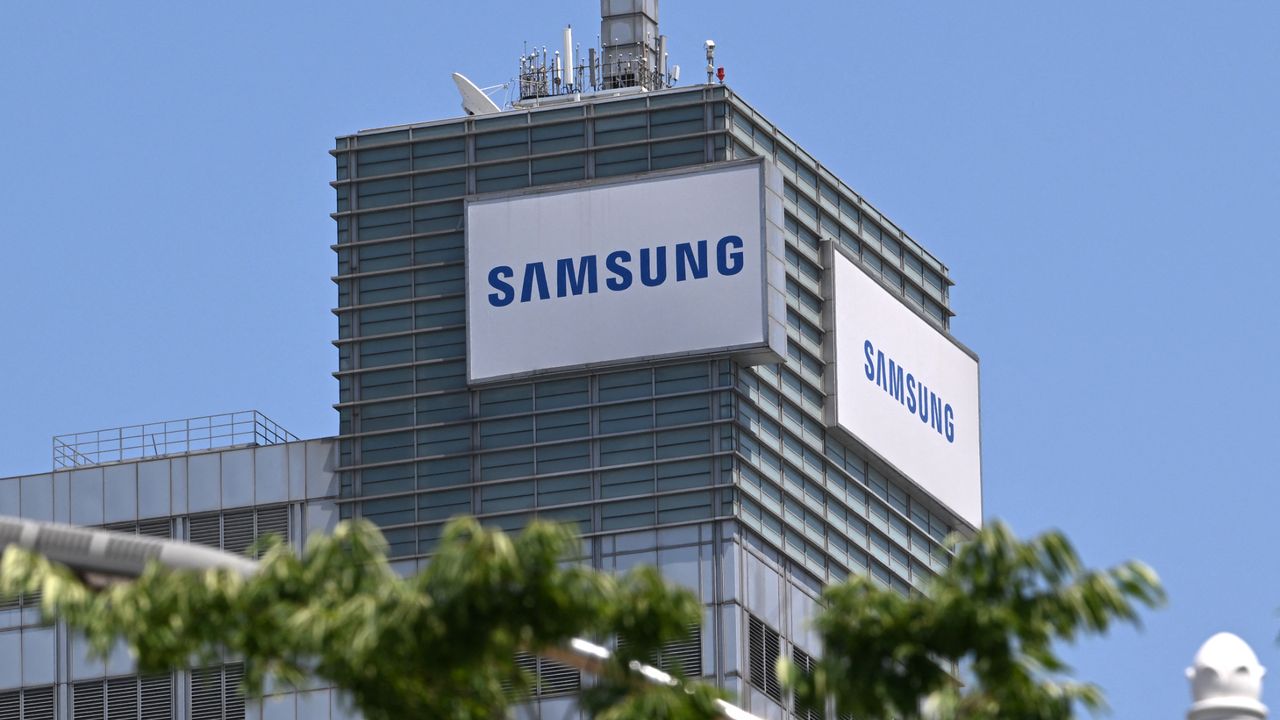
Samsung’s Device Solutions (DS) division delivered an unprecedented financial milestone last quarter, posting a 19-fold increase in operating profit that temporarily placed it ahead of Nvidia as the world’s most profitable technology company. The division’s performance underscores how surging demand for AI-powered memory and storage solutions has reshaped the economics of the semiconductor industry.
During a July 4 internal town hall, Kim Yong-Kwan, Samsung Electronics’ president overseeing corporate management, strategy, and operations, told employees that the DS division’s 2026 operating profit will surpass the cumulative earnings of its chip business over the past four decades. The claim refers specifically to Samsung’s semiconductor operations—not its broader conglomerate—which traces back to the 1974 acquisition of Korea Semiconductor. The division’s first commercial 64Kb DRAM chip rolled off production lines in the mid-1980s, laying the foundation for its current dominance in memory and logic chips.
Record quarterly earnings eclipse industry benchmarks
Samsung’s preliminary second-quarter 2026 results, disclosed on July 7, revealed an operating profit of 84.6 trillion Korean won ($55.1 billion), comfortably exceeding the consensus forecast of $53.54 billion reported by Nvidia for its most recent quarter. The DS division alone contributed 53.7 trillion won ($35.1 billion) to that total—nearly 94% of Samsung’s overall first-quarter operating profit of 57.2 trillion won ($37.2 billion). Analysts now project Samsung’s full-year 2026 operating profit to reach approximately 300 trillion won ($196 billion), a figure that would surpass the division’s cumulative earnings from 1985 to 2025, estimated by SamMobile at under 300 trillion won.
The explosive growth stems from a sharp rise in contract prices for DRAM and NAND flash memory, driven by an imbalance between supply and AI server demand. In the first half of 2026, NAND manufacturers achieved operating margins of 40% to 50%, while prices for 12GB LPDDR5X modules climbed to roughly $145. Samsung has already begun negotiating further increases for third-quarter DRAM contracts, signaling continued pricing power amid persistent supply constraints.
Supply tightness expected to persist through 2027
Samsung has cautioned customers that memory shortages may extend into at least 2027, particularly for high-bandwidth memory (HBM) used in AI accelerators. The company’s warnings align with broader industry trends: SK hynix, Samsung’s closest rival, is scheduled to report its second-quarter results on July 29, with analysts anticipating combined operating profits near 150 trillion won for the two firms in Q2 2026. Industry observers note that hyperscalers and cloud providers have already reserved multi-year supply agreements to secure scarce capacity, further tightening the market.
While Samsung’s preliminary profits reflect strong demand for its premium memory and storage products, the figures remain subject to adjustments. A profit-sharing agreement with chip workers will allocate 10.5% of the DS division’s operating profit in stock, potentially adding up to $26.6 billion in employee payouts for the year. This arrangement, approved after months of negotiations, could slightly reduce reported net earnings but underscores the division’s financial strength.
A transformative moment for semiconductor economics
Samsung’s record performance highlights the seismic shift underway in the tech industry, where AI-driven workloads are redefining profitability metrics for hardware suppliers. The division’s ability to convert surging demand into exceptional margins signals a new era for memory manufacturers, one where pricing power and supply discipline take precedence over volume-based competition. As AI adoption accelerates, companies like Samsung and SK hynix are poised to play an even more pivotal role in shaping the infrastructure of the digital economy.
AI summary
Samsung’un DS bölümü, AI talebi ve fiyat artışları sayesinde 2026’nın ikinci çeyreğinde 19 kat kâr artışı yaşadı. Peki, bu rekor performans nasıl mümkün oldu ve gelecekte neler bekleniyor?