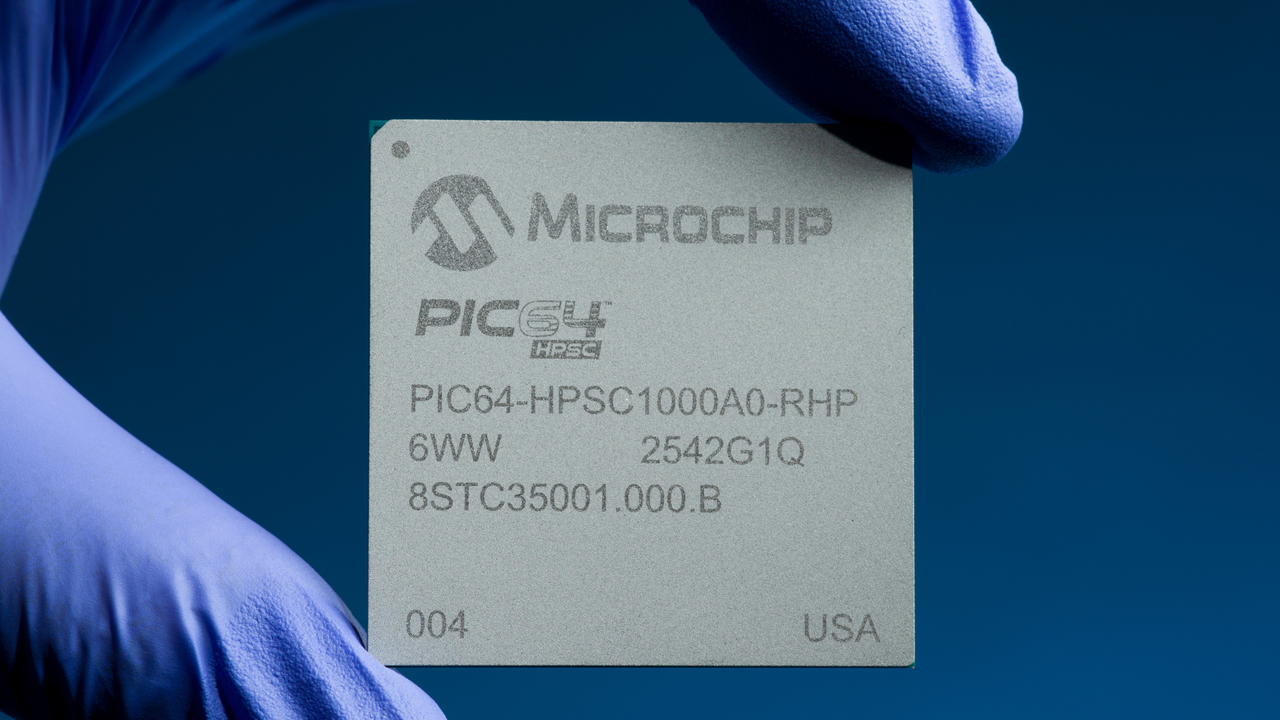
NASA has joined forces with Microchip Technology to develop a next-generation system-on-chip (SoC) capable of delivering 100 times the computing power of today’s spaceflight hardware. The radiation-hardened chip, optimized for extended lunar and Martian missions, will also introduce capabilities valuable for terrestrial industries such as automotive and aerospace. This partnership underscores NASA’s commitment to leveraging commercial innovation to advance both deep-space exploration and commercial technology.
A leap in spaceflight computing power
Modern spacecraft rely on chips designed to function in the extreme conditions of space, where radiation and temperature fluctuations can disrupt electronics. Current radiation-hardened processors typically offer performance levels in the range of hundreds of millions of instructions per second (MIPS). The new SoC, developed under this NASA-Microchip collaboration, promises to deliver up to 100 times that compute capacity, positioning it as a cornerstone for future missions beyond Earth’s orbit.
The increased processing power is expected to enable more sophisticated onboard data analysis, real-time autonomous decision-making, and improved handling of scientific payloads. These advancements are particularly critical for extended missions to the Moon and Mars, where communication delays with Earth make rapid, local decision-making essential. For instance, astronauts or rovers could process geological data on-site rather than waiting for instructions from mission control.
- Key features of the SoC include:
- Radiation tolerance exceeding 100 krad (kilorads), suitable for long-duration missions.
- Support for advanced AI and machine learning workloads at the edge.
- Scalable architecture compatible with modular spacecraft designs.
From space to Earth: cross-industry benefits
While the primary focus of the NASA-Microchip initiative is deep-space exploration, the resulting technology is anticipated to have significant spillover effects in Earth-based sectors. The automotive industry, for example, is increasingly adopting electronics capable of operating in harsh environments—such as electric vehicle battery management systems and autonomous driving platforms exposed to extreme temperatures and electromagnetic interference.
Similarly, the aerospace and defense sectors stand to gain from the chip’s improved reliability and processing capabilities. The same radiation-hardening techniques used for spaceflight could enhance the durability of commercial aviation components or satellite systems operating in high-radiation orbits. Microchip’s experience in manufacturing ruggedized chips positions it well to translate these space-grade innovations into cost-effective solutions for terrestrial applications.
Industry analysts suggest that the commercial adoption of such chips could accelerate the development of more resilient consumer electronics, particularly in markets where device longevity and performance under stress are critical. For example, ruggedized smartphones and industrial IoT sensors deployed in extreme environments could benefit from the chip’s advanced error correction and thermal management.
Testing and timeline: moving from lab to launch
The development of the new SoC is still in its early stages, with NASA and Microchip currently conducting rigorous testing to validate its performance under simulated space conditions. This includes exposure to high-energy particle radiation, extreme thermal cycling, and vacuum environments to ensure the chip can withstand the rigors of launch and deep-space operations.
While an exact timeline for deployment has not been disclosed, NASA has indicated that the technology could begin appearing in lunar missions as part of the Artemis program and later in Mars-bound spacecraft. The agency’s goal is to have radiation-hardened chips ready for critical systems by the mid-to-late 2020s, aligning with planned crewed missions to the Moon and robotic explorers to Mars.
Microchip, for its part, is leveraging its decades of experience in producing radiation-tolerant semiconductors, including chips flown on the International Space Station and Mars rovers. The company’s collaboration with NASA is expected to accelerate the commercialization of next-generation space-grade electronics, reducing both development costs and time-to-market for future space missions.
The future of space-bound and terrestrial electronics
This partnership between NASA and Microchip represents a pivotal moment in the evolution of spaceflight electronics, bridging the gap between scientific ambition and practical engineering. By pushing the boundaries of what’s possible with radiation-hardened computing, the initiative not only advances humanity’s reach into the solar system but also reinforces the vital role of public-private collaborations in driving technological progress.
As the demand for more powerful and resilient electronics grows—both in space and on Earth—the innovations emerging from this project could redefine industry standards. Whether enabling safer autonomous vehicles, more reliable satellite networks, or smarter robotic explorers, the ripple effects of this chip development are likely to be felt far beyond the launchpad.
AI summary
NASA ve Microchip’in yeni ortaklığı, uzay görevlerinde kullanılan çiplerin performansını devrimsel bir şekilde artırmayı hedefliyor. İşte Ay ve Mars’ta görev yapabilecek dayanıklı ve verimli çipin detayları.