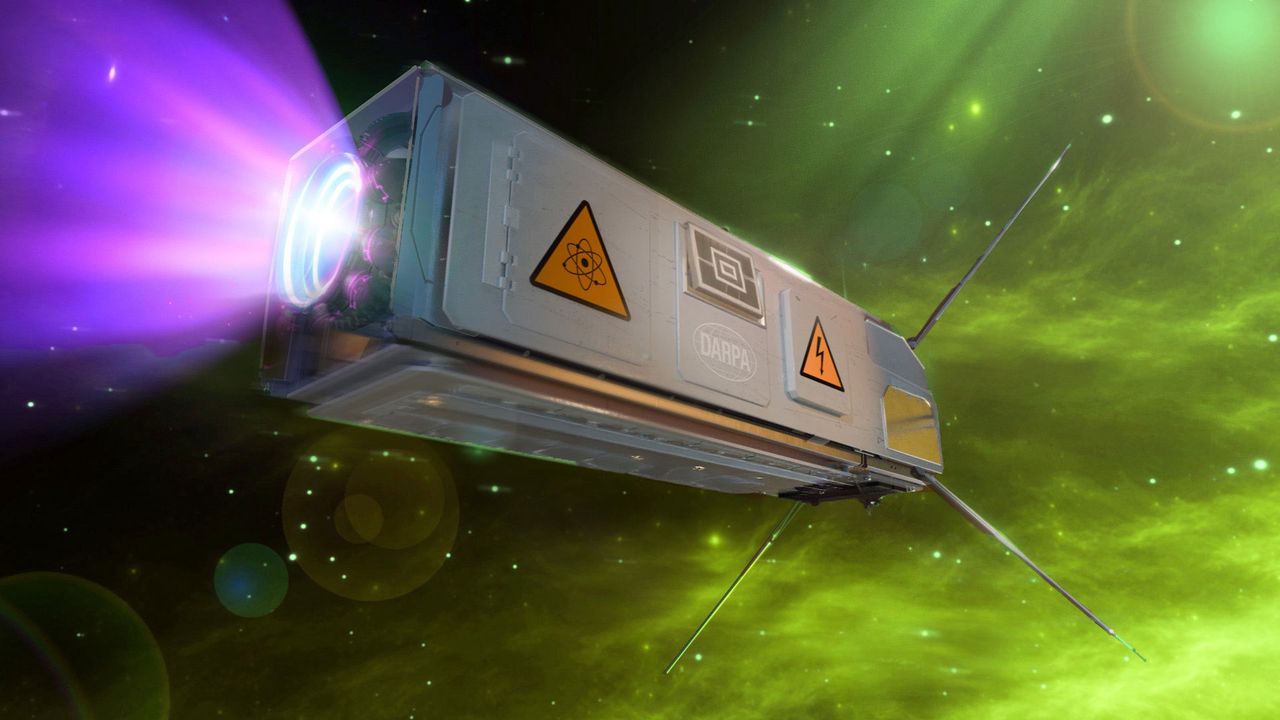
In a bold move to redefine portable power for autonomous systems, the U.S. Defense Advanced Research Projects Agency (DARPA) is advancing a groundbreaking initiative to develop nuclear waste-powered batteries that could operate for up to 30 years. The project, named SYMPHONEE, is part of the broader ‘Rads to Watts’ program and focuses on harnessing Strontium-90, a radioactive isotope commonly found in nuclear waste, to fuel next-generation drones and remote sensing devices.
From Waste to Watts: A Radiovoltaic Revolution
DARPA’s ‘Rads to Watts’ program is not just another energy research effort—it represents a paradigm shift in how we perceive nuclear byproducts. By extracting Strontium-90 from spent nuclear fuel, researchers aim to convert radioactive decay into reliable electrical power. This approach builds on decades of radiovoltaic technology, which has already powered low-energy applications like space probes and medical implants.
Morgan State University recently secured a $3.37 million contract to lead SYMPHONEE, a multi-organizational collaboration that includes Northrop Grumman, Pacific Northwest National Laboratory (PNNL), Project Omega, ARA, and Widetronix. The team’s goal is to refine radiovoltaic devices into high-power, long-life systems capable of sustaining autonomous operations in environments where traditional power sources fail. These include deep underwater, remote terrestrial locations, and even space—where recharging or fuel replenishment is impractical or impossible.
Designing the Future: Key Innovations and Partners
The SYMPHONEE project is structured around three core technical pillars: advanced materials, nuclear science, and device engineering. PNNL will oversee nuclear material handling and testing, while Northrop Grumman and ARA will contribute AI-driven modeling to optimize power output and system reliability. Widetronix, a specialist in radiovoltaic converters, will design the micro-generator architectures that form the heart of these next-gen power cells.
Project Omega, a key research partner, has already demonstrated prototypes of sea drones equipped with these batteries, showcasing a potential operational lifespan of a decade. These systems are designed to operate persistently in extreme environments, where conventional lithium-ion batteries would degrade or require frequent replacements. The integration of Strontium-90 into the power cells ensures a stable energy output, as the isotope’s decay rate remains consistent over time.
Professor Michael Spencer, the technical lead for the project at Morgan State, emphasized the transformative potential of this technology. “Our team is pushing the boundaries of what radiovoltaic systems can achieve,” Spencer stated. “By combining advanced materials with nuclear science, we’re creating power sources that can operate for decades, unlocking new possibilities for autonomous systems in the most challenging environments.”
Strategic Implications: Energy Independence and Defense Applications
The implications of this technology extend far beyond experimental drones. Military strategists envision a future where autonomous underwater vehicles (AUVs) and unmanned aerial systems (UAS) can patrol contested regions without logistical constraints. A Northrop Grumman representative highlighted the strategic value of persistent power sources, noting that they could revolutionize “next-generation defense systems” by reducing reliance on vulnerable supply chains.
Project Omega is also exploring civilian applications, such as underwater security systems for critical infrastructure like undersea cables. These systems could provide continuous monitoring and protection for decades, eliminating the need for costly and risky maintenance operations. The project’s focus on repurposing nuclear waste into a strategic asset aligns with broader efforts to turn environmental liabilities into technological advantages.
The Road Ahead: Challenges and Opportunities
While the SYMPHONEE project represents a significant leap forward, several challenges remain. Ensuring the safe handling and containment of Strontium-90 is paramount, particularly in military and civilian applications. Regulatory hurdles, public perception of nuclear technology, and the need for rigorous testing will shape the timeline for deployment. However, the potential benefits—unmatched endurance, energy independence, and reduced operational costs—make this a high-stakes endeavor.
As the project progresses, the collaboration between academia, defense contractors, and national labs will be critical in translating laboratory breakthroughs into real-world solutions. If successful, SYMPHONEE could redefine the capabilities of autonomous systems, paving the way for a new era of persistent, low-maintenance power in extreme environments.
AI summary
DARPA’nın SYMPHONEE projesi, Stronsiyum-90 ile çalışan radyovoltaik bataryalarla dronlara 30 yıl boyunca kesintisiz güç sunacak. Askeri ve sivil uygulamalarda devrim yaratacak teknolojiyi keşfedin.