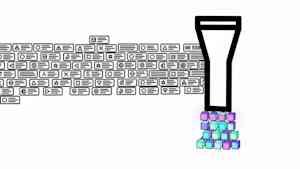
Long-context models are hitting a wall. As agents accumulate tokens from documents, reasoning traces, and conversation history, the growing context becomes a memory and compute bottleneck. Traditional KV-cache compression methods either degrade accuracy or fail to deliver real speedups in standard serving setups. A new research breakthrough offers a solution that works in production today.
The rise of compressed context in production
Context windows in large language models are expanding rapidly, but infrastructure upgrades are struggling to keep pace. The problem isn’t just storage—it’s the sheer volume of tokens consuming GPU memory and compute during inference. Most existing compression techniques fall short: either they reduce accuracy too much, require full context loading before compression begins, or their memory savings don’t translate into measurable performance gains.
A research team spanning NYU, Columbia, Princeton, the University of Maryland, Harvard, and Lawrence Livermore National Laboratory has introduced Latent Context Language Models (LCLMs), a novel approach that compresses input context before it reaches the decoder. Unlike KV-cache methods—which still materialize the full cache before eviction—LCLMs shrink the input token sequence upfront, directly reducing decoder-side compute and memory requirements.
Performance breakthroughs with minimal accuracy loss
The team’s experiments reveal dramatic improvements. At 4x compression, LCLMs maintain 91.76% accuracy on the RULER long-context benchmark—just a 2.65-point drop from the uncompressed baseline of 94.41%. Even at 16x compression, where 93.75% of tokens are removed, accuracy only dips to 75.06%. By comparison, every KV-cache method tested at the same compression ratio scored lower.
The benefits extend beyond long contexts. On GSM8K math word problems, where entire prompts are compressed rather than just retrieved documents, LCLMs outperformed all other methods regardless of compression level. These results suggest the technique could be universally applicable across tasks.
Inside the LCLM architecture
LCLMs pair a lightweight encoder with a more substantial decoder. The 0.6-billion-parameter encoder compresses blocks of input tokens into shorter latent embeddings, which the 4-billion-parameter decoder processes in place of the original tokens. Training spanned over 350 billion tokens, combining three key data types:
- Continual pre-training with interleaved compressed and uncompressed spans
- Supervised fine-tuning for reasoning and long-context tasks
- An auxiliary reconstruction task to preserve fine-grained detail
A key insight emerged during architecture search: scaling the decoder matters more than scaling the encoder. This aligns with the observation that larger decoders better handle compressed representations without sacrificing task performance.
Integration and real-world deployment
LCLMs are designed to slot into existing agentic stacks with minimal friction. As Micah Goldblum, co-lead advisor and Columbia University researcher, explains: "You can simply swap out LCLMs for any existing LLM. When you retrieve data like documents and want to feed it into your model’s context, just run those documents through the LCLM compressor first."
The team also demonstrated selective decompression strategies, allowing agents to skim vast amounts of text before zooming in on relevant details—a process Goldblum likens to human reading behavior. However, he cautions that teams integrating LCLMs will need to tune their RAG systems accordingly.
One unresolved challenge is online compression of reasoning traces. Goldblum notes that while periodically compressing traces might work, this approach hasn’t been rigorously tested. For agents generating long reasoning chains, context growth from traces remains an open problem separate from document retrieval.
Enterprise implications and adoption roadmap
The pressure on context windows is mounting. VB Pulse Q1 2026 survey data from over 100 organizations shows hybrid retrieval adoption intent more than tripling from 10.3% in January to 33.3% in March. Retrieval optimization has overtaken model evaluation as the top investment priority, reaching 28.9% of qualified respondents.
Three critical considerations emerge for enterprises evaluating LCLMs:
- Inference costs scale exponentially with context length. At 1 million tokens, standard KV-cache methods exhaust memory on a single H200 GPU. LCLMs at 16x compression remain within bounds at this scale.
- RAG pipelines require careful validation. Teams must test compression behavior against retrieval quality metrics before scaling deployment.
- Reasoning trace compression remains unsolved. For agents with long reasoning chains, context growth from traces isn’t addressed by current LCLM approaches.
The models are open-sourced on Hugging Face and GitHub, offering enterprises a practical path to long-context efficiency without sacrificing accuracy or incurring massive infrastructure costs.
The most transformative potential of LCLMs may lie in enabling multiscale processing—allowing models to rapidly skim vast amounts of text or code before focusing on critical details. If this capability matures, it could redefine how agents interact with large-scale data, making long-context processing not just feasible but cost-effective at scale.
AI summary
Uzun bağlamlı yapay zeka modellerinin bellek ve hesaplama maliyetini 16 kata kadar azaltan LCLM teknolojisi hakkında detaylar. Doğruluk kaybı olmadan çalışan yeni sıkıştırma yöntemi ve işletmelere etkileri.