
Interactive guide decodes how LLMs work step-by-step
A single HTML file uses Andrej Karpathy’s lecture transcript to visualize the inner mechanics of large language models. No external dependencies, just instant clarity on transformer architecture.
A single HTML file uses Andrej Karpathy’s lecture transcript to visualize the inner mechanics of large language models. No external dependencies, just instant clarity on transformer architecture.

2026 demands more than experimental AI—it requires strategic infrastructure choices. Discover how RAG, fine-tuning, and prompting stack up against key performance criteria to drive ROI, security, and accuracy in enterprise LLMs.

Structured output benchmarks often overlook value accuracy in LLM-generated JSON. A new benchmark reveals surprising gaps even in top models like GPT-5 and Claude, with rankings shifting dramatically across text, images, and audio.

Building a production-grade RAG pipeline in TypeScript revealed three critical mistakes that derailed development—until structural chunking, hybrid search, and metadata strategies fixed them. Avoid these pitfalls with actionable lessons from a real-world deployment.

Vector search excels at quick answers but stumbles on complex questions requiring cross-document reasoning. GraphRAG builds a knowledge graph to connect ideas across documents, solving problems standard RAG pipelines can't handle.

Hybrid AI architectures blend small and large models to cut costs while maintaining performance. Learn why developers are adopting this approach now to build faster, smarter, and more sustainably.

Many SaaS founders rush into agentic AI without assessing whether simpler solutions would work. Here’s a clear framework to decide when agents are truly worth the cost and complexity.

New research reveals how large language models absorb incorrect statements even when training data explicitly labels them as false, shedding light on the persistent challenge of AI hallucinations.

A recent graduate shares how publicly tracking AI education milestones turned learning into career momentum, with actionable tips for aspiring engineers.
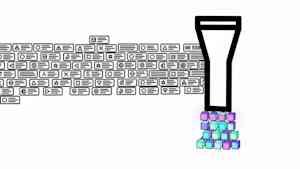
A new family of encoder-decoder models is cutting LLM context windows down to a fraction of their original size, delivering 16x compression while preserving near-peak accuracy and unlocking faster inference speeds in production.