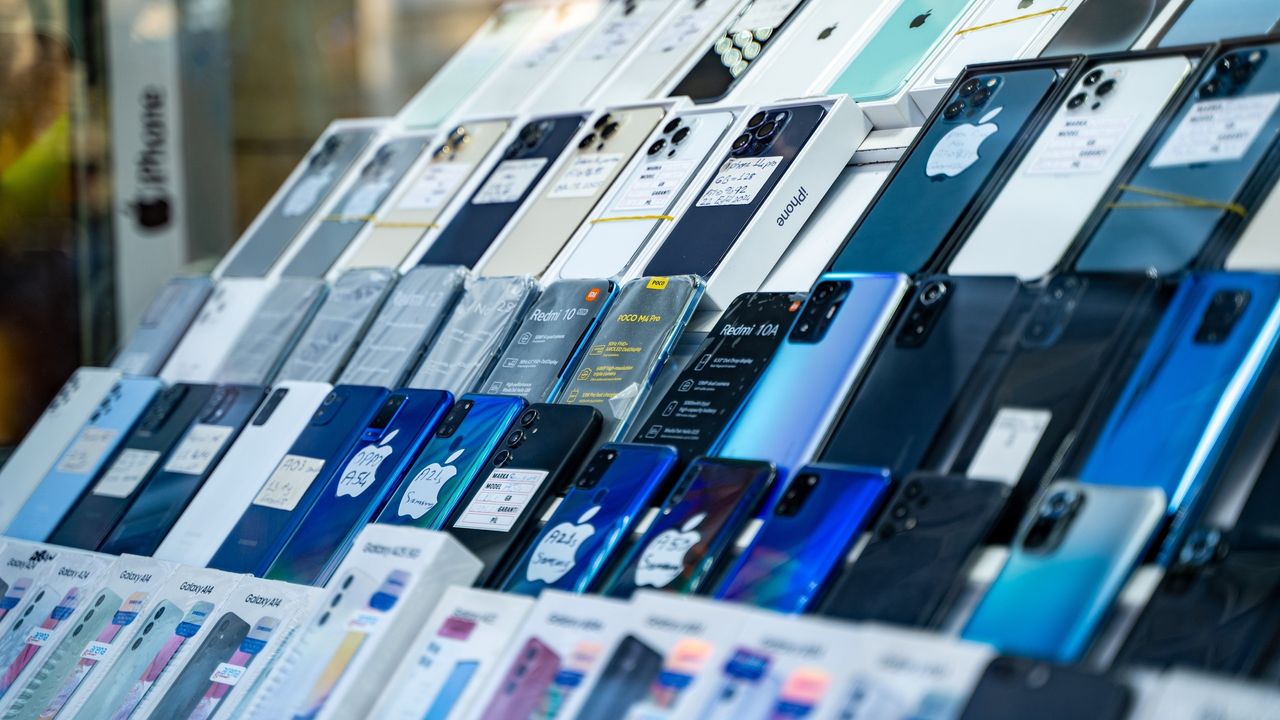
The smartphone market is facing a severe contraction, and the culprit is not declining innovation—it’s soaring memory costs. According to a recent analysis by Omdia, global shipments of smartphones priced under $400 are expected to drop by over 22% this year, dragging down the entire global smartphone market by 12% compared to 2025. The reason? The cost of DRAM and NAND flash memory has skyrocketed, making budget devices nearly impossible to produce profitably.
The memory bottleneck reshaping smartphone economics
Every smartphone is built from hundreds of components, but none have a more dramatic impact on cost than memory chips. Omdia’s latest Quarterly Smartphone Technology Trends report reveals that memory now accounts for up to 64% of the total manufacturing cost in ultra-budget phones priced below $99. Even in devices under $400, the share has nearly doubled since late 2025, rising from around 30% to nearly 60%. This shift is directly tied to the redirection of semiconductor production capacity toward High Bandwidth Memory (HBM), which is prioritized for AI data centers over traditional commodity memory used in smartphones.
The consequences are stark. Memory giants like SK hynix, Samsung, and Micron have scaled back fabrication of standard DRAM and NAND flash, leaving little room for the low-capacity, cost-sensitive memory chips that budget phones rely on. The result? A dramatic increase in contract prices for smartphone manufacturers, who now face an impossible financial equation: either raise retail prices to uncompetitive levels or abandon the low-end market entirely.
Manufacturers forced to abandon the low-end market
Budget smartphone brands, particularly Chinese value players like Xiaomi (Redmi and POCO), OPPO, Vivo, and Transsion (Tecno and Infinix), operate on razor-thin margins. According to Omdia principal analyst Zaker Li, these manufacturers have little room to absorb rising component costs without passing them on to consumers. But price-sensitive buyers in the entry-level segment are highly resistant to increases. A $150 phone jumping to $220, for example, often triggers a sharp decline in demand.
Facing these unsustainable economics, many vendors are making a strategic retreat. Some have scaled back production of low-end models, while others have exited the segment entirely, focusing instead on mid-range and premium devices where margins remain viable. Omdia predicts that while the sub-$400 market collapses, smartphones priced above $400 will grow by 5.7% this year, reflecting a fundamental shift in the industry’s priorities.
How brands are adapting—at the expense of features
To survive in higher price brackets without absorbing the full brunt of memory cost increases, smartphone manufacturers are resorting to several cost-cutting measures:
- Display downgrades: Chinese vendors are replacing advanced LTPO OLED screens with older LTPS OLED panels in mid-range models, saving $3 to $5 per unit. LTPS panels consume more power but offer significant cost advantages.
- Processor reuse: System-on-chip (SoC) costs remain the largest expense in phones priced over $600. To mitigate this, manufacturers are reusing previous-generation processors, cutting chip costs by 30% to 40% compared to cutting-edge silicon.
- Camera simplification: Mid-range phones are dropping secondary lenses, such as ultra-wide or macro cameras, or reverting to smaller image sensors to reduce component costs.
Even top-tier flagships like the iPhone 17 Pro or Galaxy S26 Ultra are not immune to these pressures. While memory accounts for a smaller percentage of their total bill of materials due to premium components like titanium frames and custom silicon, the broader industry-wide surge in memory prices is still driving up retail costs for high-end devices. Consumers shopping for premium smartphones are increasingly being asked to pay the price difference.
A glimmer of hope—eventually
If you’re hoping for relief in the form of lower smartphone prices, the outlook remains uncertain. Memory manufacturers and government regulators are investing heavily to address the bottleneck. South Korea, home to major memory producers like Samsung and SK hynix, recently announced an $870 billion, 10-year public-private investment framework to expand production capacity and modernize fabrication facilities. However, these efforts will take years to materialize, leaving consumers and manufacturers in a holding pattern for the foreseeable future.
For now, the smartphone market is bifurcating into two distinct segments: a shrinking low-end tier struggling with unsustainable costs, and a resilient mid-to-high-end segment where price increases are becoming the new norm. The era of affordable smartphones may not be over, but it is certainly evolving—and consumers will need to adjust their expectations accordingly.
AI summary
Bütçe akıllı telefon pazarı, bellek fiyatlarının %64’e ulaşmasıyla çöküş yaşıyor. Xiaomi, OPPO ve Vivo gibi markalar neden ucuz modellerden vazgeçiyor? Tüketiciler neleri beklemeli? Ayrıntılar burada.