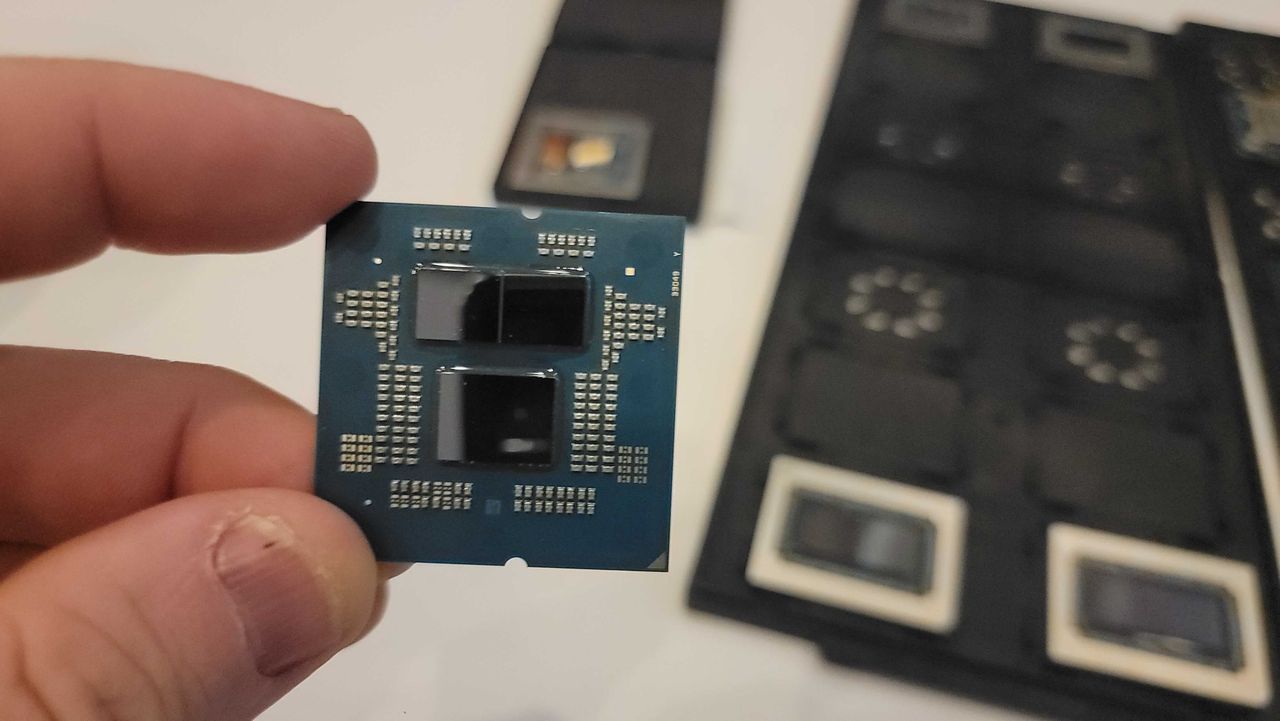
AMD has expanded its Ryzen PRO desktop lineup with a groundbreaking addition: the Ryzen 9 PRO 9965X3D. This new processor marks the company’s first PRO-class chip to integrate 3D V-Cache technology, pairing 16 Zen 5 cores with a stacked cache layer to boost performance in demanding professional workloads.
The chip surfaced on PassMark’s benchmark database with only three test runs recorded, yet its specifications already tell a compelling story. Based on the standard Ryzen 9 9950X3D, the PRO variant inherits the same core architecture but introduces refinements tailored for business environments. Early performance data suggests it delivers throughput comparable to its non-PRO counterpart, while likely operating at a reduced thermal design power (TDP). This efficiency edge could make it a compelling choice for workstations where stability and power consumption matter.
Zen 5 architecture meets PRO reliability
The Ryzen 9 PRO 9965X3D leverages AMD’s latest Zen 5 core design, offering a blend of high clock speeds and improved instructions per cycle (IPC). The 3D V-Cache layer—stacked on top of the compute die—enhances data access speeds for memory-intensive applications like content creation, virtualization, and engineering simulations. While the exact cache size remains unconfirmed, the technology’s presence alone signals AMD’s commitment to closing performance gaps in professional workflows.
Unlike consumer-focused chips, PRO series processors are engineered with extended warranty periods, validated security features, and enterprise-grade support. These attributes make the Ryzen 9 PRO 9965X3D particularly attractive for IT departments managing workstation fleets. The chip’s 16-core configuration also aligns with AMD’s strategy to cater to high-core-count workloads, from data analytics to 3D rendering.
Benchmark hints and efficiency gains
PassMark’s limited data points to the Ryzen 9 PRO 9965X3D achieving performance metrics close to the Ryzen 9 9950X3D. However, the PRO variant’s lower TDP could translate to cooler operation and reduced power draw—critical factors for workstation stability and total cost of ownership. Analysts speculate the TDP might sit around 120W, though AMD has not yet confirmed official specifications.
Enterprise buyers should note that the chip’s PRO branding implies stricter validation processes and guaranteed long-term availability. This reliability focus often outweighs marginal performance differences for businesses prioritizing uptime over raw benchmarks. The Ryzen 9 PRO 9965X3D’s emergence signals AMD’s intent to capture share in the professional desktop market, where Intel’s vPro lineup has traditionally dominated.
What’s next for Ryzen PRO?
AMD’s PRO series has evolved from a niche offering to a cornerstone of its desktop strategy, now spanning from entry-level to high-end configurations. The inclusion of 3D V-Cache in a PRO chip underscores the company’s push to unify consumer and professional segments under the same architectural umbrella. With Zen 5 now powering both segments, businesses can expect more cohesive ecosystem support and driver stability.
The Ryzen 9 PRO 9965X3D’s arrival also raises questions about future PRO variants with 3D V-Cache, potentially including Threadripper PRO models. As AMD refines its desktop portfolio, the PRO line is likely to become the default choice for workstations requiring a balance of performance, efficiency, and reliability. Expect further details at upcoming tech events or through official channel partner announcements.
AI summary
AMD, Ryzen 9 PRO 9965X3D ile ilk PRO 3D V-Cache masaüstü CPU’sunu tanıttı. 16 çekirdekli Zen 5 işlemci performans ve verimlilikte yeni standartlar belirliyor.