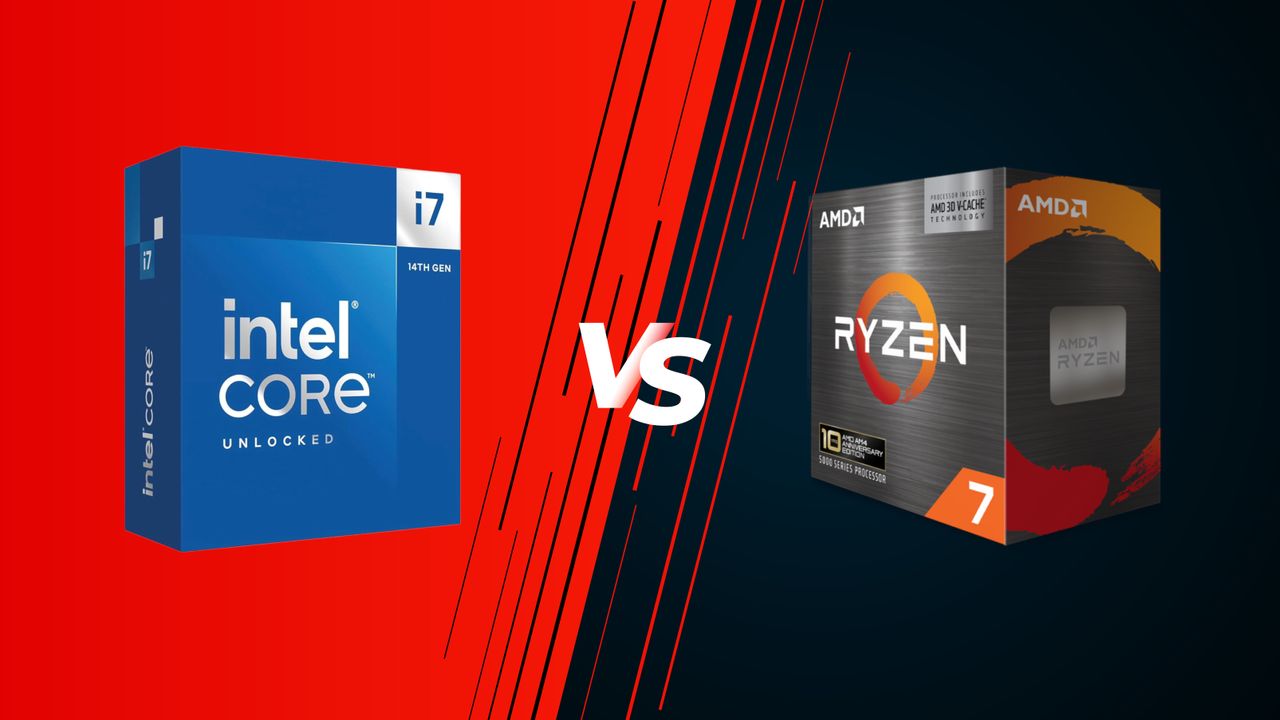
The desktop CPU market in 2026 remains fiercely competitive, but two processors stand out as unexpected rivals. AMD’s Ryzen 7 5800X3D, a four-year-old gaming champion, has been reintroduced to challenge Intel’s Core i7-14700K. While the 5800X3D once reigned supreme in gaming thanks to its pioneering 3D V-Cache, the 14700K brings modern hybrid-core architecture, higher clock speeds, and support for both DDR4 and DDR5 memory. This rematch pits raw gaming performance against architectural innovation in a battle for supremacy among DDR4-based systems.
What sets these CPUs apart?
The Ryzen 7 5800X3D is built on AMD’s Zen 3 architecture, manufactured on TSMC’s 7nm process, and features 8 cores and 16 threads. Its standout feature is the 96 MB of L3 cache, with 64 MB of that provided by the 3D V-Cache stack — a first of its kind when it launched in early 2022. The CPU operates at a base frequency of 3.4 GHz, boosting to 4.5 GHz, and has a TDP of 105W, though its power excursion limit reaches 142W. It supports DDR4-3200 memory over a dual-channel interface and connects via the AM4 socket, compatible with 300-, 400-, and 500-series chipsets. Notably, the 5800X3D lacks integrated graphics and disables core overclocking due to its stacked cache design, though DRAM overclocking remains possible.
By contrast, Intel’s Core i7-14700K represents the Raptor Lake Refresh generation, built on Intel’s 10nm Enhanced SuperFin (now branded as Intel 7) process. It features a hybrid design with 8 performance cores and 12 efficiency cores, totaling 20 cores and 28 threads. The P-cores can boost up to 5.6 GHz, while the E-cores peak at 4.3 GHz. The chip supports both DDR4-3200 and DDR5-5600 memory and delivers up to 16 PCIe Gen 5 lanes and 4 PCIe Gen 4 lanes. With a TDP of 125W and a PL2 limit of 253W, it includes integrated UHD Graphics 770 and is fully unlocked for overclocking on Z-series motherboards.
Performance in gaming and real-world tasks
To evaluate these CPUs, we ran a 16-game benchmark suite at 1080p using an RTX 5090 to minimize GPU bottlenecks. The results highlight a clear advantage for the Core i7-14700K. Across the test suite, the 14700K averaged 166.7 FPS in geometric mean, outperforming the Ryzen 7 5800X3D’s 145.6 FPS — a 14.5% lead. In lower-percentile metrics, such as 1% lows, the Intel chip extended its advantage to roughly 20%, indicating more consistent frame delivery and reduced stuttering.
The 5800X3D’s strength traditionally lies in latency-sensitive gaming workloads, where its massive L3 cache reduces memory access delays. However, modern games increasingly rely on higher core counts and thread scheduling efficiency, areas where the 14700K’s hybrid architecture excels. The combination of higher clock speeds, more cores, and improved IPC delivers better average and minimum frame rates, especially in titles with heavy multithreading or background processes.
Beyond gaming, productivity performance also favors the Intel chip. In multi-threaded content creation tasks such as video rendering, image processing, and compilation, the 14700K’s 20-core design provides a substantial edge. While the Ryzen 7 5800X3D remains competitive in cache-sensitive workloads, it struggles to keep pace with the broader performance improvements introduced by its newer rival.
Power, efficiency, and platform implications
Thermal design and power consumption are crucial considerations. The Ryzen 7 5800X3D operates within a 105W base TDP but can spike to 142W under load. Its power efficiency is notable in gaming scenarios where high cache utilization reduces memory bandwidth demands. In contrast, the Core i7-14700K draws significantly more power, with a PL2 limit of 253W, which can translate to higher electricity costs and greater cooling requirements in high-performance systems.
Platform compatibility is another key difference. The 5800X3D leverages the aging AM4 socket, offering broad compatibility with older motherboards but limiting future upgrade paths. It also restricts users to DDR4 memory and PCIe Gen 4 lanes. The 14700K, meanwhile, is compatible with 600- and 700-series Intel boards, supports both DDR4 and DDR5, and includes PCIe Gen 5 connectivity — a forward-looking feature set that aligns better with modern build standards.
Which CPU should you choose?
Choosing between these two CPUs in 2026 depends largely on your priorities. If gaming performance is your top concern and you already own an AM4 system, the Ryzen 7 5800X3D offers a cost-effective upgrade path with proven gaming prowess. Its 3D V-Cache continues to deliver low-latency responsiveness in many titles, making it a strong option for budget-conscious gamers.
For most users, however, the Intel Core i7-14700K represents the better overall value. Its superior performance across gaming and productivity, support for modern memory standards, and overclocking flexibility make it a versatile choice. While it consumes more power and requires newer platform support, the performance gains are substantial and align with current software demands.
As we look ahead, the trend toward hybrid architectures and higher core counts is likely to continue. The 14700K not only meets today’s needs but is better positioned for future software advancements. For users building or upgrading in 2026, the Intel chip emerges as the more balanced and future-proof option.
AI summary
2026’da DDR4 platformunda yeni bir savaş başladı: AMD Ryzen 7 5800X3D mi yoksa Intel Core i7-14700K mi? Teknik özellikler, performans testleri ve avantajlar karşılaştırması.