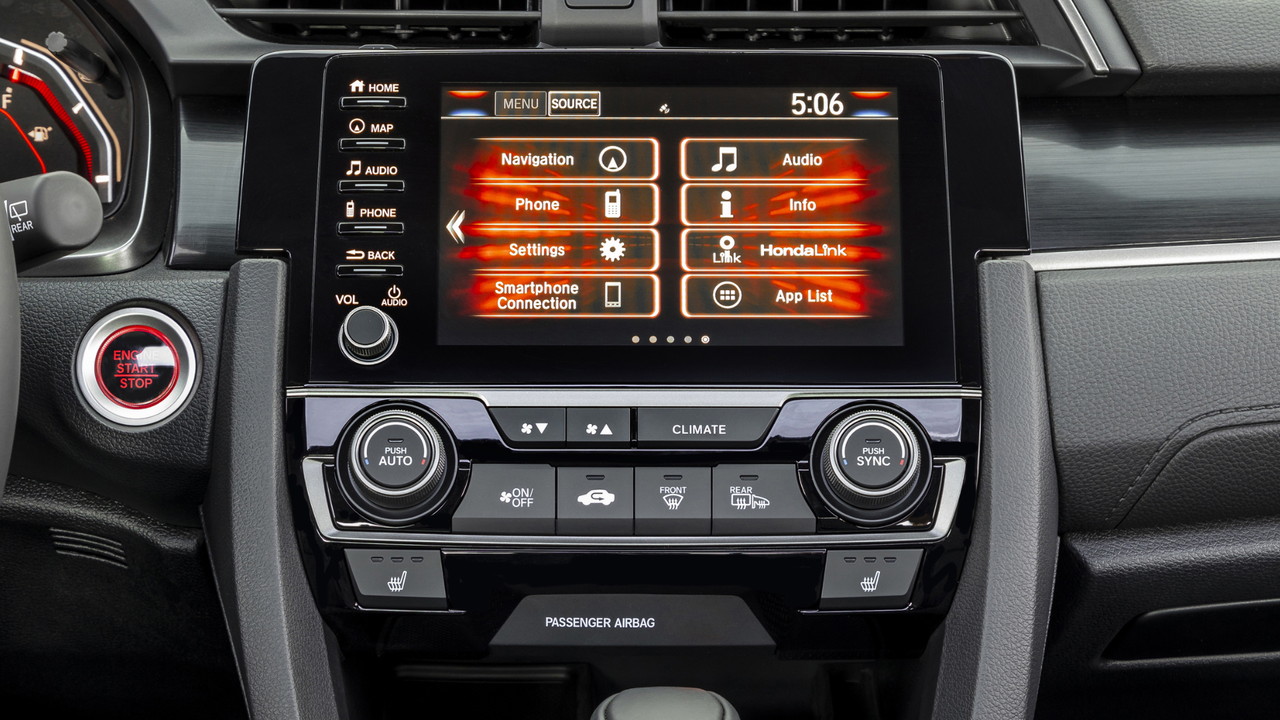
The infotainment system in the 2021 Honda Civic contains a security weakness that could allow attackers to install malicious applications through a standard USB connection. A software architect identified that while the system requires a signed AOSP (Android Open Source Project) file for updates, the public availability of Android’s test keys makes it possible to bypass these protections. This oversight exposes the vehicle’s software to unauthorized modifications, including potential malware deployments.
How the exploit works: USB port as a gateway
The vulnerability stems from the infotainment unit’s reliance on Android’s AOSP test keys, which are widely accessible. These keys are typically used for development and debugging but are not intended for production environments. By leveraging these keys, an attacker could craft a malicious update file and load it onto the system via the front USB port. The infotainment unit would then accept and execute the unsigned payload, effectively granting control over the system’s functionality.
Once compromised, the infotainment system could be used as a vector for further attacks, such as the so-called "EvilValet" scenario. In this type of exploit, a compromised vehicle could trick users into performing actions that seem legitimate but are actually controlled by malware. For example, an attacker might force the system to display fake payment prompts or manipulate navigation data, leading to financial loss or safety risks.
The role of AOSP test keys in the flaw
Android’s AOSP test keys are public by design, serving as a convenience for developers during the early stages of software development. However, their inclusion in a production vehicle system like the 2021 Honda Civic creates a critical security gap. Unlike production keys, which are tightly controlled and kept private, test keys are freely available online. This makes it relatively straightforward for someone with technical knowledge to create a spoofed update file that the infotainment system will accept.
The flaw does not require physical access to the vehicle’s internal components. Instead, the attacker only needs brief access to the USB port—such as during a service visit, car wash, or valet parking—making it a practical exploit for real-world scenarios. Honda has not yet addressed the issue publicly, though the company may release a software patch or recall if the vulnerability is confirmed.
Mitigation and future implications
Vehicle cybersecurity has become a growing concern as infotainment systems integrate deeper with a car’s critical functions. This flaw highlights the importance of using production-grade cryptographic keys and implementing robust validation checks during software updates. For consumers, the risk remains theoretical for now, but the potential for exploitation underscores the need for manufacturers to prioritize security in connected systems.
Honda owners should stay alert for official software updates addressing this issue. In the meantime, avoiding the use of unfamiliar USB drives and regularly reviewing infotainment system behavior for unusual activity may help mitigate risks. As vehicles become more software-driven, the industry must adopt stricter security standards to prevent similar vulnerabilities from emerging in the future.
AI summary
2021 Honda Civic’in multimedya sistemi, USB üzerinden yetkisiz uygulamaların yüklenmesine olanak tanıyan güvenlik açığı nedeniyle risk altında. 'EvilValet' saldırılarına karşı nasıl korunabilirsiniz?