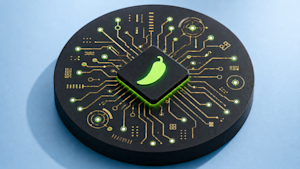
OpenAI and Broadcom have joined forces to unveil Jalapeño, the first custom AI inference chip designed specifically to accelerate large language models (LLMs). Unlike general-purpose GPUs, this Application-Specific Integrated Circuit (ASIC) is engineered to optimize inference workloads—the critical phase where models generate responses—making it a game-changer for ChatGPT, Codex, and future AI agents. The chip’s development timeline is nothing short of remarkable: from initial schematics to fabrication readiness in just nine months, a pace that typically spans years in the semiconductor industry.
A Lightning-Fast Development Fueled by AI Models
The rapid deployment of Jalapeño stems from a tightly integrated software-hardware co-development process. OpenAI leveraged its own models to refine chip design, streamlining iterations and reducing bottlenecks before physical prototypes even arrived. According to OpenAI’s announcement, the company plans to begin rolling out these chips across its data centers by the end of 2025. Early testing has already begun, with the chip running production-ready workloads for models like GPT‑5.3‑Codex‑Spark in controlled environments.
The collaboration between OpenAI and Broadcom was publicly formalized in October 2025, but the teams worked in lockstep to ensure every transistor and interconnect was optimized for real-world performance. Broadcom contributed critical silicon implementation and networking technology, including Tomahawk networking silicon, while Celestica handled board, rack, and system integration. This partnership aims to push the chip’s practical performance limits beyond theoretical benchmarks.
Why an ASIC Could Outperform General-Purpose GPUs
Traditional GPUs like those from Nvidia or AMD are designed for versatility, handling everything from graphics rendering to AI workloads. In contrast, Jalapeño is an ASIC—built from the ground up for a single purpose: efficient LLM inference. Industry analysts note that this specialization can deliver significant cost and performance advantages, though at the expense of flexibility.
OpenAI’s decision to develop Jalapeño reflects its hands-on experience running large-scale AI systems. By eliminating unnecessary data movement and better aligning compute, memory, and networking resources, the chip reduces overhead while improving efficiency. The result? Faster response times, lower energy consumption, and potentially lower operational costs—a crucial advantage as AI models grow increasingly complex.
OpenAI’s Financial Woes May Find Relief in Proprietary Hardware
Behind the technical breakthrough lies a pressing financial reality. According to audited financial documents analyzed by industry observers, OpenAI generated $13.07 billion in revenue in 2025 but faced staggering operational expenses totaling $34 billion, resulting in an operating loss of nearly $20.92 billion. The bulk of these costs stemmed from compute infrastructure, much of it tied to training and serving massive models.
Research and development alone accounted for $19.18 billion—over half of the company’s total spending. Additionally, OpenAI reportedly paid Microsoft more than $10.59 billion last year for R&D and compute resources. These financial pressures underscore the urgency behind Jalapeño’s development. By reducing inference costs and bringing more of the AI stack in-house, OpenAI aims to improve unit economics and move closer to profitability ahead of its anticipated 2026 public offering.
"Designing more of the stack ourselves allows us to deliver intelligence more efficiently and push advanced AI toward broader accessibility," said Greg Brockman, OpenAI’s president and co-founder, in a statement accompanying the announcement. The company’s long-term vision hinges on controlling both hardware and software layers to enhance performance while mitigating dependency on external providers.
A Strategic Shift in the AI Chip Landscape
Jalapeño’s introduction raises immediate questions about OpenAI’s evolving relationship with its chip suppliers. Historically, OpenAI has been one of Nvidia’s largest customers, relying heavily on its GPUs to power ChatGPT and other services. However, the company’s push into proprietary hardware signals a potential pivot toward reducing reliance on third-party vendors.
While GPUs remain dominant in AI training, Jalapeño targets the inference phase—a critical bottleneck as AI adoption scales. If successful, the chip could set a precedent for other AI companies to develop custom silicon, reshaping the competitive dynamics of the semiconductor market. Analysts suggest that this move could pressure Nvidia and AMD to further innovate in specialized inference hardware or risk losing key customers to vertically integrated competitors.
The road ahead for Jalapeño is not without challenges. Performance benchmarks, cost structures, and manufacturing scalability remain untested in large-scale deployments. Yet, as AI models become more resource-intensive, the demand for efficient, purpose-built hardware will only intensify. OpenAI’s gamble on Jalapeño could prove pivotal—not just for the company’s financial health, but for the future of AI infrastructure.
AI summary
OpenAI ve Broadcom’un dokuz ayda geliştirdiği Jalapeño AI çıkarım çipi, LLM’lerden ChatGPT’ye kadar kullanıma hazır. Maliyetleri düşürme ve bağımsızlığa giden yolculukta devrim yaratabilir.