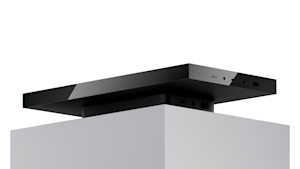
Microsoft has introduced the Surface RTX Spark Dev Box, a small-form-factor desktop that empowers developers to run advanced AI models locally without relying on cloud-based services. Unveiled at Microsoft Build 2026, the device combines Nvidia’s latest RTX Spark processor with 128GB of unified memory, delivering up to one petaflop of AI compute power. This setup allows developers to load and interact with models exceeding 120 billion parameters entirely on-device, eliminating the need for costly cloud API calls.
Pavan Davuluri, Microsoft’s executive vice president of Windows and Devices, highlighted the device’s capability during a pre-event briefing. "We believe these devices will support models around 100 billion parameters," he noted. Davuluri emphasized that model size alone isn’t sufficient for effectiveness. "A larger model requires more context, and at 100,000 tokens of context, the key-value cache alone can consume 40 to 50GB of memory." To address this, Microsoft and Nvidia engineered the Dev Box with a 128GB unified memory pool, dynamically shared between the CPU and GPU, ensuring seamless operation for intensive AI workloads.
The Surface RTX Spark Dev Box will launch later this year, exclusively available through Microsoft’s official store. Pricing details remain undisclosed as of now.
Why Microsoft is pushing for local AI development over cloud dependency
The economics of AI development have increasingly become a concern for businesses, with cloud GPU costs rising unpredictably. Teams often face escalating expenses from repeated fine-tuning, inference calls, and agentic workflows that rely on frontier models. Microsoft positions the Dev Box as a solution to this challenge, offering developers a way to handle routine tasks locally while reserving cloud resources for cutting-edge applications.
Andrew Hill, Microsoft’s corporate vice president of Surface, outlined this strategy in the company’s announcement. He stated that the device "shifts the equation" by enabling developers to "handle routine model calls on their own hardware while reserving cloud resources for truly frontier problems." This approach doesn’t advocate for abandoning cloud computing entirely but instead introduces a balanced alternative that reduces dependency on unpredictable cloud pricing.
The move reflects a broader industry shift where the unsustainable marginal costs of AI inference at scale are driving demand for alternatives. By offering hardware that reduces cloud reliance, Microsoft acknowledges a growing tension between local and cloud-based AI workflows. The company appears to bet that developers prototyping on local devices will still deploy scaled solutions on its Azure cloud platform, creating a more integrated ecosystem.
Breaking down the 128GB unified memory architecture
The technical foundation of the Surface RTX Spark Dev Box is built around sustained performance rather than peak bursts, a critical distinction for AI workloads that may run for extended periods. At its core, the device integrates Nvidia’s RTX Spark system-on-chip, which merges an efficient ARM-based CPU with a Blackwell-generation RTX GPU.
Traditional high-end Windows PCs typically require separate components: a dedicated CPU, a discrete GPU, graphics memory, and system RAM. The RTX Spark consolidates these into a single chip paired with a unified memory pool. This design choice is pivotal for handling large models that would otherwise demand cloud GPU instances with specialized high-bandwidth memory.
Microsoft implemented several operating system-level optimizations to leverage this architecture. The company enhanced Windows’ memory management to increase the GPU’s addressable memory ceiling, introduced smarter page-size allocation for shared memory regions, and ensured GPU-intensive workloads don’t deplete CPU resources needed for multitasking. Additionally, the Windows scheduler was fine-tuned for RTX Spark’s heterogeneous core layout, directing demanding tasks to performance cores while keeping efficiency cores available for background processes.
How thermal innovation enables sustained AI workloads
The Surface RTX Spark Dev Box operates within a 100-watt sustained thermal envelope—a modest power draw for a device designed to handle training and inference tasks. The compact chassis integrates a 3D-printed aluminum frame that doubles as a heatsink, effectively dissipating heat generated during intensive AI computations.
This thermal design ensures the device remains stable during prolonged AI workloads without requiring external cooling solutions. By prioritizing energy efficiency and heat management, Microsoft has created a system that balances performance with practicality, making it suitable for developers working in office or lab environments.
Looking ahead, the Surface RTX Spark Dev Box could redefine how AI development is approached, shifting more computational power to the edge. As local hardware capabilities advance, the line between cloud and on-premise AI may continue to blur, fostering innovation while keeping costs predictable.
AI summary
Microsoft’un yeni Surface RTX Spark Dev Box’ı, 128 GB birleşik belleği ve Nvidia RTX Spark işlemcisiyle AI modellerini yerel olarak çalıştırma imkanı sunuyor. Bulut maliyetlerini azaltan bu cihaz, geliştiriciler için devrim niteliğinde.