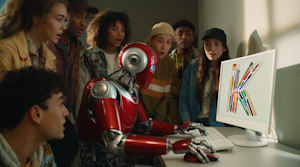
Anthropic has transformed how teams interact with AI in the workplace by introducing Claude Tag, a persistent AI teammate embedded directly in Slack. Unlike conventional chatbots or assistants that respond to isolated commands, this tool functions as a shared, autonomous team member capable of learning from ongoing conversations, monitoring channels, and executing multi-step tasks on behalf of the entire group.
Available today in beta for Claude Enterprise and Team customers, Claude Tag replaces the company’s earlier Slack integration and marks a bold step toward embedding AI at the heart of enterprise decision-making. For organizations still deliberating where AI fits into their operational workflows, this release shifts the conversation from "how to use AI" to "how to collaborate with AI as a core teammate."
How Claude Tag operates as a team member, not a tool
Claude Tag’s architecture is built for seamless collaboration. After an administrator integrates it into a Slack workspace, grants access to approved tools and data sources, and sets spending limits, any team member can summon it by typing @Claude followed by a request. Whether drafting a pull request, analyzing sales metrics, or summarizing a project update, the AI breaks down the task, executes each step using its connected tools, and delivers results directly in a Slack thread—visible to everyone involved.
Four standout features set Claude Tag apart from typical AI integrations:
- Multiplayer by design: Unlike one-on-one AI assistants, Claude Tag operates as a single entity within a channel, visible and interactive for all members. Conversations and progress are transparent, allowing teams to pick up where others left off without re-explaining context.
- Continuous learning: The AI absorbs relevant context from ongoing discussions and permitted data sources, reducing the need for repetitive instructions. It avoids accessing private channels and respects access boundaries set by administrators.
- Proactive initiative: With ambient behavior enabled, Claude Tag monitors channels and tools, surfacing critical updates or following up on unresolved threads—acting as an active participant rather than a passive responder.
- Asynchronous execution: Tasks can span hours or days, running autonomously in the background while teams focus on higher-priority work. Anthropic reports that its own product team now delegates parallel tasks to multiple instances of Claude Tag, streamlining workflows.
Underpinning these capabilities is the latest model, Claude Opus 4.8, which powers the agent’s reasoning and execution.
Enterprise-grade control and security take priority
Security and governance are not afterthoughts in Claude Tag’s design. Administrators can create distinct identities for different use cases—each scoped to specific channels, tools, and data sources. For instance, a Claude configured for engineering won’t share memory or access with one set up for sales analytics. This isolation ensures sensitive information remains compartmentalized.
Administrative controls include:
- Spend limits: Token usage can be capped at the organization or channel level to prevent cost overruns.
- Full audit trails: Every action taken by Claude Tag is logged, including who initiated the task and what was performed. This level of transparency is essential for compliance, audit, and regulatory requirements.
Migrating from the previous Slack integration requires administrator approval within 30 days. Anthropic is offering introductory launch credits to eligible Enterprise and Team customers to ease adoption. The four-step setup—workspace pairing, tool integration, spend configuration, and private channel testing—is streamlined to minimize disruption for IT teams managing complex software ecosystems.
Slack is the new frontier for AI agents—and the competition is fierce
Claude Tag arrives as Slack solidifies its role as the central hub for enterprise AI agents. The messaging platform has positioned itself as an "agentic operating system," and major tech players are vying to dominate this space.
Salesforce, which acquired Slack in 2021 for $27.7 billion, has been expanding its AI integrations, while competitors like Microsoft and Google are accelerating their own agent-based offerings. The stakes are high: whoever controls the conversational layer where decisions are made will shape the future of enterprise productivity.
Anthropic’s move signals a shift from AI as a supplementary tool to AI as a teammate—one that participates in real time, learns from the team, and operates autonomously. For businesses still evaluating AI’s role, Claude Tag doesn’t just offer another integration; it presents a new way to work.
As enterprises continue to adopt agentic AI, the success of tools like Claude Tag may hinge on balancing autonomy with trust, transparency, and seamless integration into existing workflows. The question is no longer whether AI will become a core part of the workplace—but how soon teams will rely on it as their default coworker.
AI summary
Anthropic, ekibinizin yerini alabilecek akıllı bir AI görevlisi olan 'Claude Tag'i Slack'e sundu. Bu yenilik sayesinde ekipler, yapay zekanın otomatik olarak görevleri yürüttüğü, projeleri takip ettiği ve hatta sorunları öngördüğü bir çalışma ortamına kavuşuyor.